Perspective
Research Centre
A New Understanding of Perspective
Discover and Apply the Science of Perspective
Advancing understanding.
Perspective
Discover what perspective is—its history, principles, phenomena and applications.
Explore Perspective →
Research
Research programmes in perspective, Leonardo da Vinci studies and the work of Kim H. Veltman.
Our Research →
Library & Archives
A 5,000-book library, including 700 Leonardo volumes and 600+ Veltman Archive publications.
Explore the Archive →
Knowledge Systems
Digital tools for research: Dictionary, Bibliography, Encyclopaedia, etc.
Digital Systems →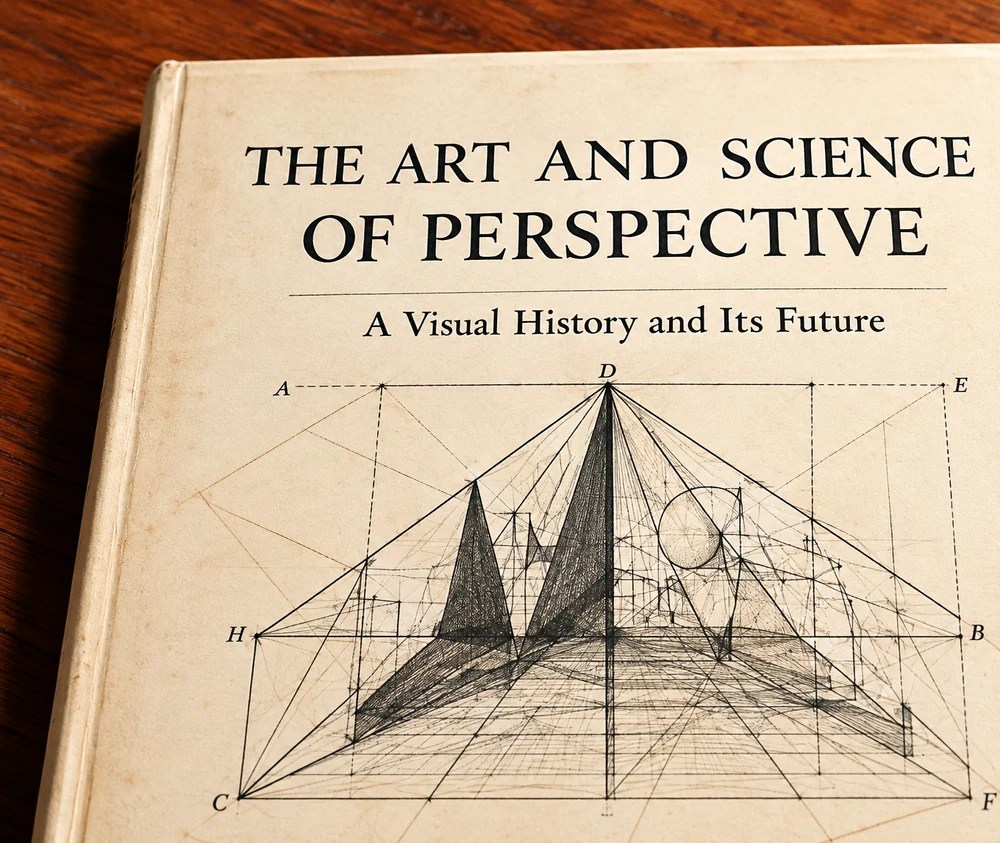
Publications
Books and major research publications by Alan S. Radley and Kim H. Veltman.
View Publications →
Learn
Tutorials, guides and learning resources for students, educators and professionals.
Start Learning →Navigation Map of Perspective
Perspective Category Theory organises perspective through seven analytical levels: Category, Class, Type, Form, Phenomenon, Function and Product, forming a unified classification framework.
A Category is a top-level mode of perspective that may exhibit distinctions at any of the other six levels. PRC has identified 1,200 perspective types and forms.
Explore perspective —
click any box →
Who This Site Is For — and Why
For anyone seeking to understand, teach, research or apply perspective — from students and educators to artists, architects, designers, photographers, filmmakers and scientists, practitioners and researchers in related fields.
Perspective is involved in almost every kind of image and view
It is fundamental to human vision, photographic and scientific imaging, computer graphics and the modern technologies of vision.
How PRC Helps
With the Dictionary of Perspective and Perspective Category Theory, we provide the terminology, classifications and conceptual frameworks needed to understand, analyse and apply this complex subject.
Perspective Category Theory provides a systematic framework for organising and comparing the many kinds and relationships of perspective across art, science and technology. PRC research identifies approximately 1,200 named types and forms across 7 analytical levels: Category, Class, Type, Form, Phenomenon, Function and Product.
Who This Site Is For — and Why
For anyone seeking to understand, teach, research or apply perspective — from students and educators to artists, architects, designers, photographers, filmmakers and scientists, practitioners and researchers in related fields.
Perspective is involved in almost every kind of image and view
It is fundamental to human vision, photographic and scientific imaging, computer graphics and the modern technologies of vision.
Explore the map below by selecting any box →
What Is Perspective — and Why Does It Matter?
For centuries, perspective has occupied an important place in art, science and the study of spatial representation, becoming especially prominent in Western academic traditions over the past 500 years. Today, it remains fundamental to vision, art, science and technology, underpinning photography, cinema, architecture, astronomy, medical imaging, computer graphics, computer vision, artificial intelligence, robotics, special effects, digital filmmaking, virtual production, holography and immersive realities.
Perspective extends far beyond drawing three-dimensional scenes. It concerns how we view, image, represent, interpret, construct and transform spatial reality and its representations. Developed across Western and non-Western cultures, it encompasses natural, artificial and synthetic perspectives, together with numerous visual, optical, graphical, geometrical and simulated types and forms. Its many types include linear, curvilinear, spherical, parallel, anamorphic and inverse perspectives.
Yet despite its importance, perspective is rarely studied as a unified discipline. Its knowledge is scattered across specialist fields, with differing terminology and methods, leaving many principles and relationships insufficiently understood. This fragmentation creates the need for a unified understanding of perspective across art, science and technology.
Why Is Perspective So Challenging?
Perspective is a vast, complex and still partly mysterious subject.
Much of this complexity arises from the interaction of optical, geometrical, physical and perceptual processes involved in viewing, imaging, measuring, constructing, representing and interpreting spatial reality and its representations.
Different processes may operate simultaneously or in sequence, sometimes producing similar appearances through different methods. A single image may result from the interaction or combination of multiple perspective categories, types, forms and phenomena, making their individual contributions difficult to identify. Overlapping concepts, inconsistent terminology and unfamiliar spatial relationships create further difficulties.
PRC works to address these problems through Perspective Category Theory, systematically identifying, distinguishing and organising the many types, forms and relationships of perspective to make the subject easier to understand and apply.
PRC Mission Statement
Establishing perspective as a distinct field
Our goal is to expand humanity’s capacity to understand and solve problems involving perspective.
To achieve this, PRC addresses three connected problems:
TERMINOLOGY PROBLEM
Different disciplines use conflicting, overlapping or inconsistent terms to describe perspective’s principles, methods and phenomena. The Dictionary of Perspective clarifies their meanings, resolves ambiguities, establishes conceptual distinctions and identifies relationships between terms and concepts.
COMPLEXITY PROBLEM
Perspective can be extraordinarily complex, involving interacting optical and perceptual phenomena, physical processes, spatial relationships and multiple visual layers. These elements may operate simultaneously or in sequence, producing appearances whose underlying causes can be difficult to distinguish. Perspective Category Theory provides a framework for analysing these interactions, mitigating complexity and improving understanding, interpretation and practical application.
CLASSIFICATION PROBLEM
Perspective encompasses a vast range of categories, classes, types, forms and phenomena extending far beyond conventional drawing. PRC has identified and systematically organised approximately 1,200 named types and forms, providing a coherent framework for comparing, distinguishing and investigating perspective across vision, imaging and spatial representation.
PRC’S APPROACH
Through original research, specialist collections and digital knowledge systems, PRC clarifies terminology, analyses complex processes and relationships, and systematically classifies the methods, phenomena and forms of perspective, establishing a foundation for its study across art, science and technology.
Dr Alan Stuart Radley FRSA — Founder and Research Director
Learn more about PRC →
Salvator Mundi (“Savior of the World”) is a painting attributed in whole or part to Leonardo da Vinci, dated c. 1499–1510.
In the painting, perspective is combined with Leonardo’s investigations of vision, light and optics.
Professor Martin Kemp identifies the transparent orb as rock crystal, arguing that Leonardo selectively controlled refraction so it did not disrupt the devotional image — what Kemp calls “pictorial good manners.”
Leonardo da Vinci (1452–1519) extended perspective beyond drawing into the study of vision and spatial representation, connecting optics, geometry, light and visual perception.
technology, vision and visual
culture through a single field
of knowledge.
Hubs, Indexes & Catalogues
Theory Hubs
Catalogues
“Perspective serves to build bridges between geometry and nature.”
“The central goal of perspective is visual knowledge.”
Perspective — The Familiar and the Unfamiliar
PRC identifies approximately 1,200 named types and forms of perspective across art, science and technology. The nine examples below demonstrate how different methods, viewpoints, spatial arrangements and optical effects produce distinct perspective appearances and representations of three-dimensional reality.

Linear Perspective
Parallel road edges appear to converge towards a distant vanishing point.
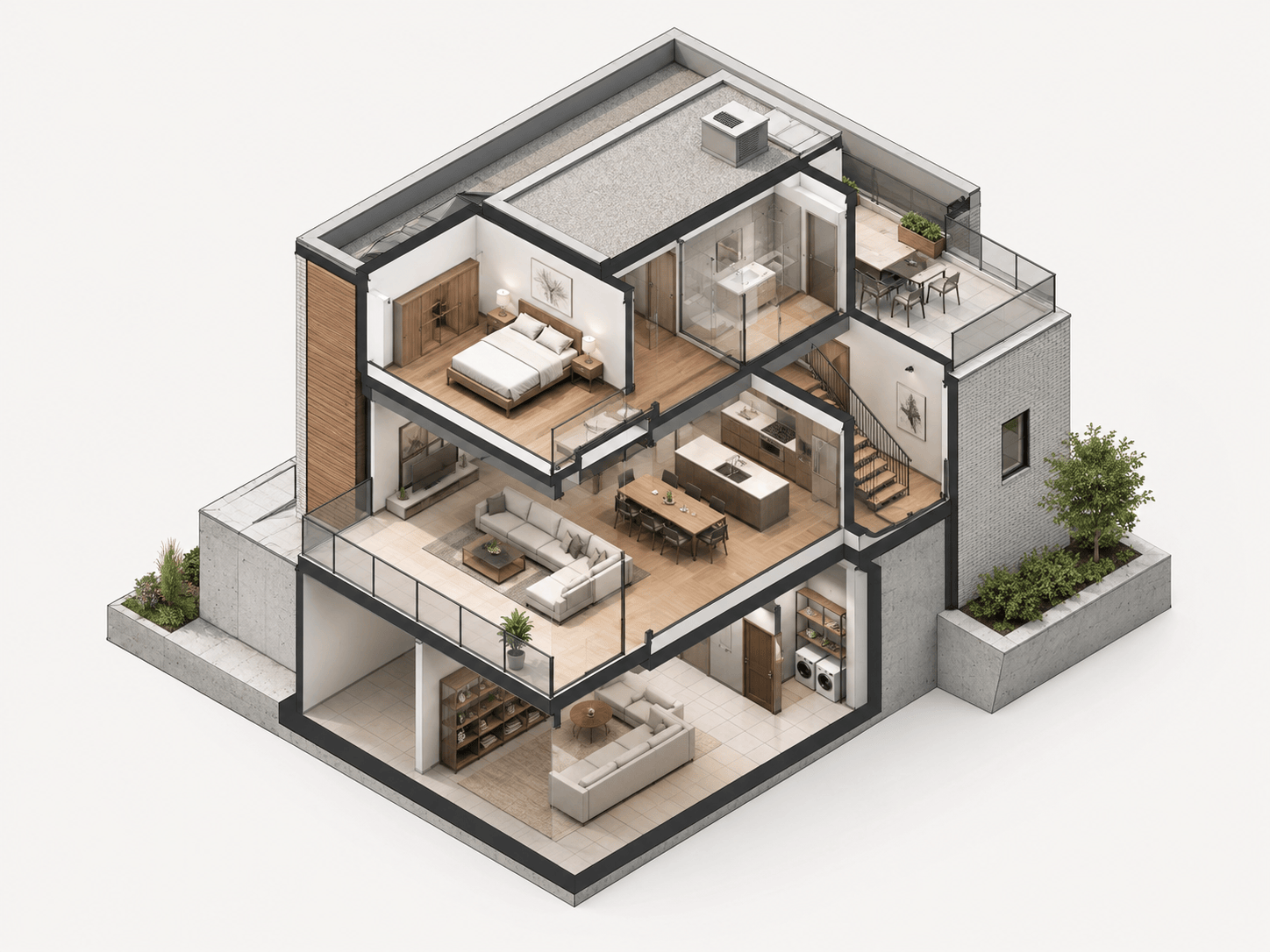
Parallel Perspective (Axonometric)
Parallel directions remain parallel in axonometric projection.
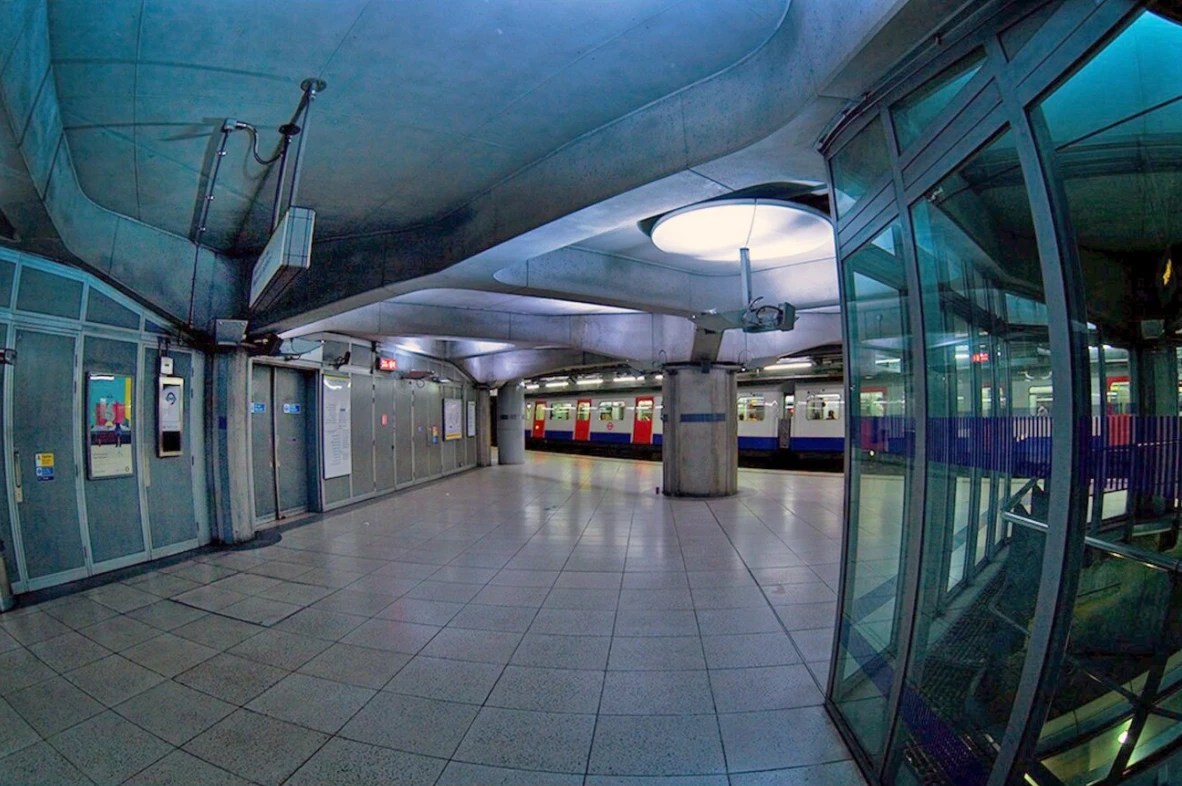
Curvilinear Perspective
Straight spatial features may appear curved in wide-angle representations.

Aerial Perspective
Distant features lose contrast and clarity through atmospheric effects.
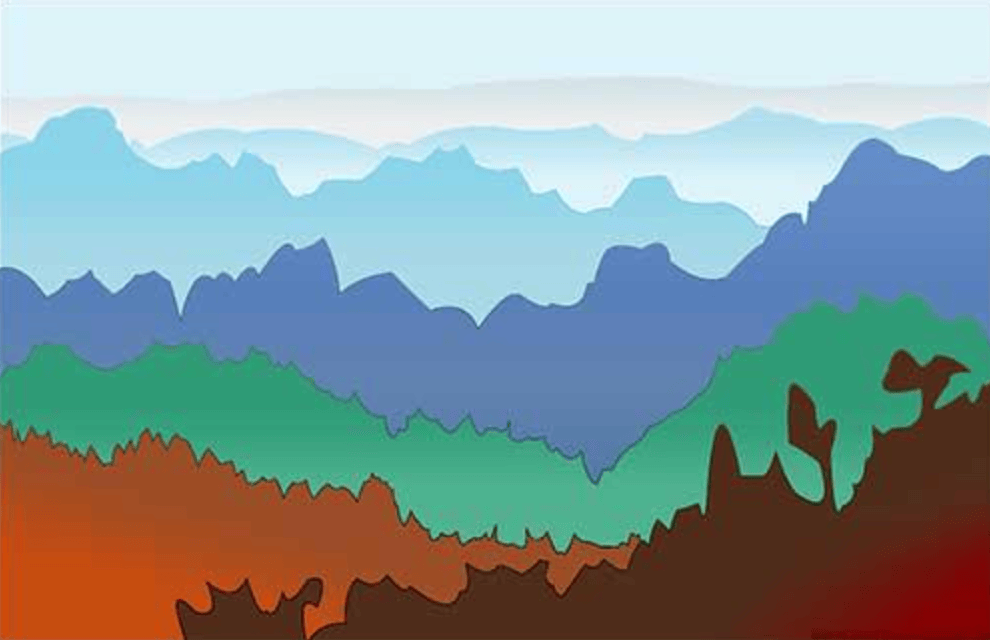
Colour Perspective
Changes in colour, hue and saturation can create or reinforce the appearance of spatial depth.
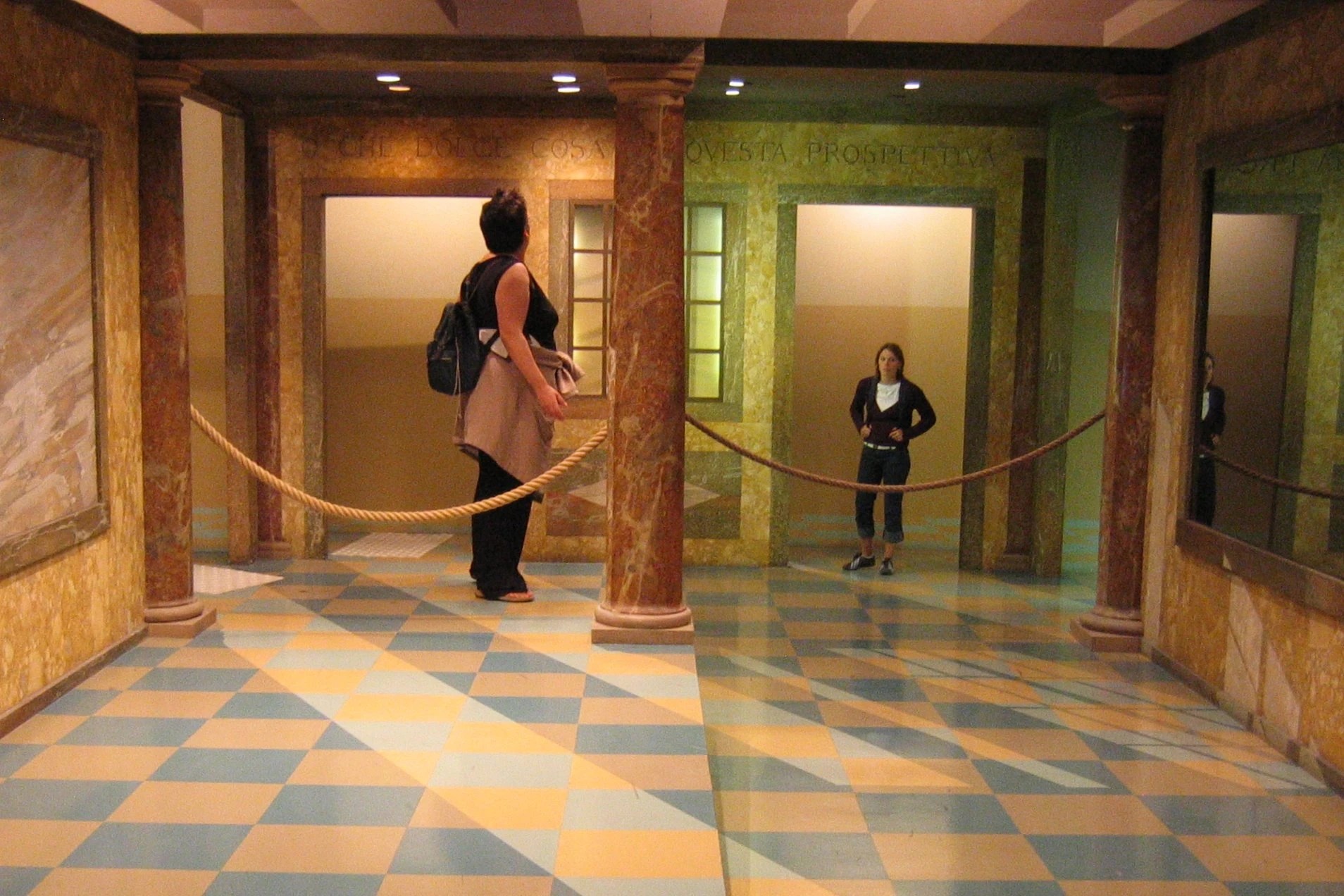
Forced Perspective
A specially constructed room makes people appear dramatically different in size.
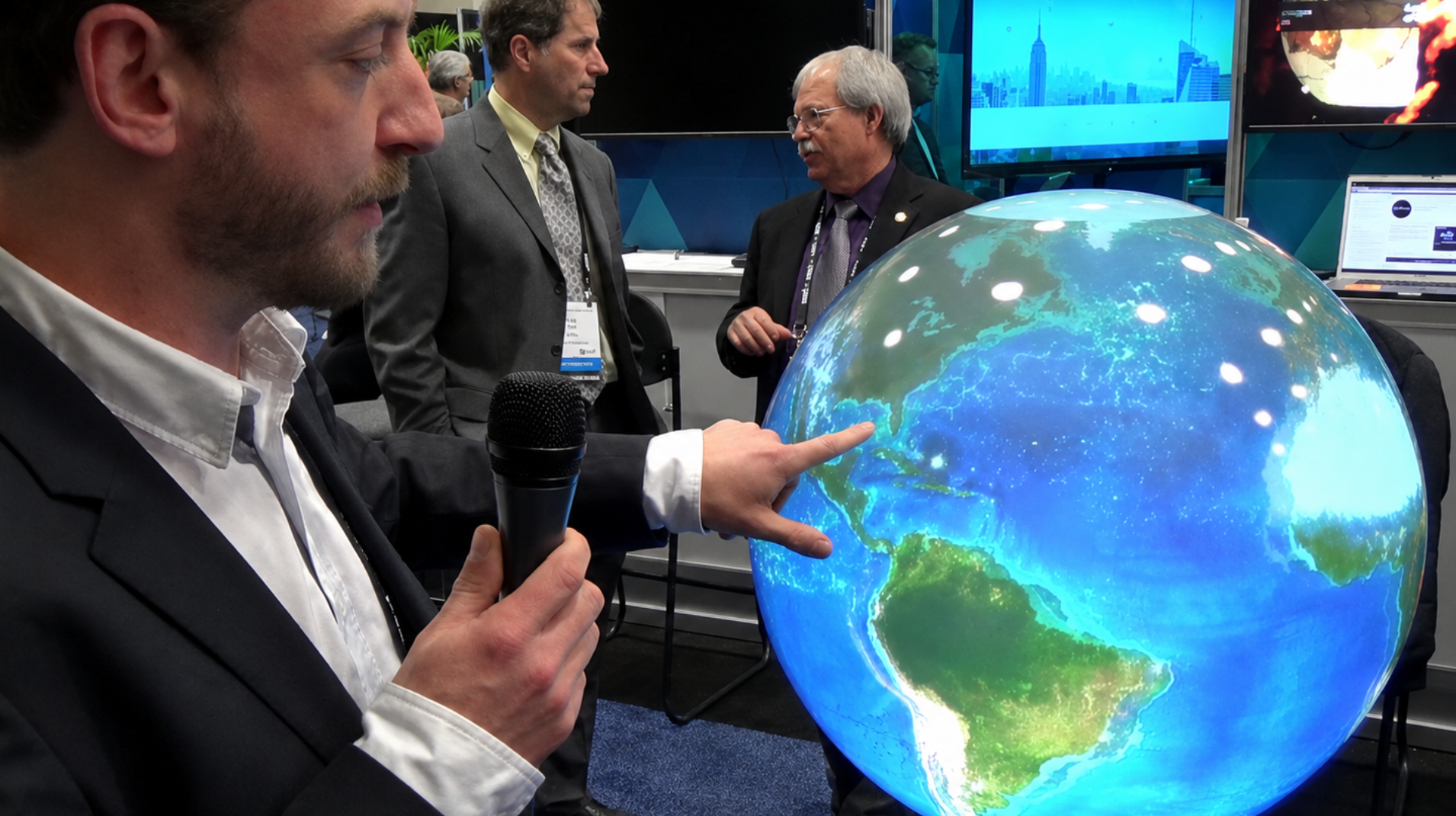
Spherical Perspective
The illustration shows Sphere of Revolution Perspective, depicting an unfolding globe or ball view.
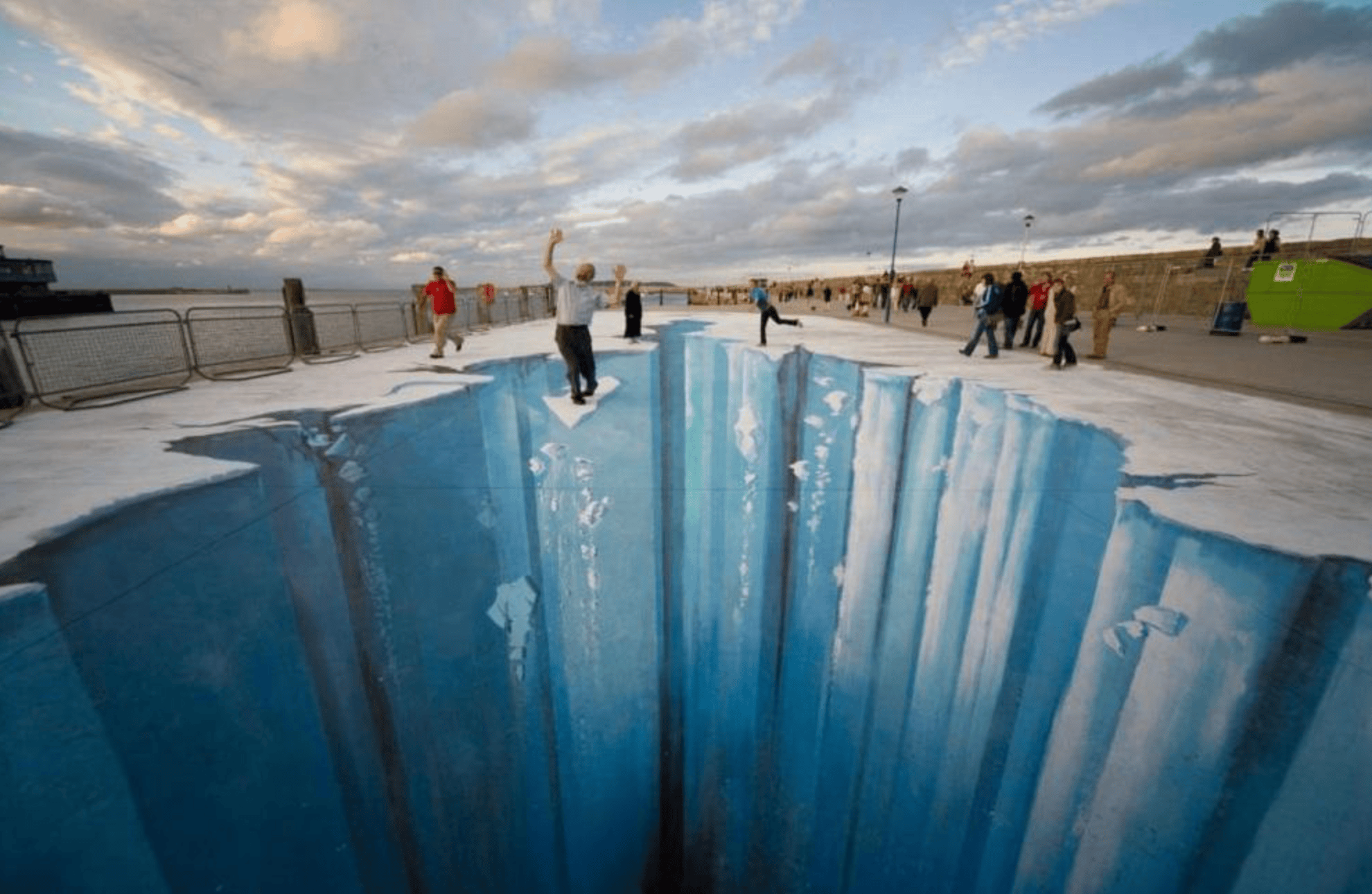
Anamorphic Perspective
A deliberately distorted image appears three-dimensional when viewed from a particular position.
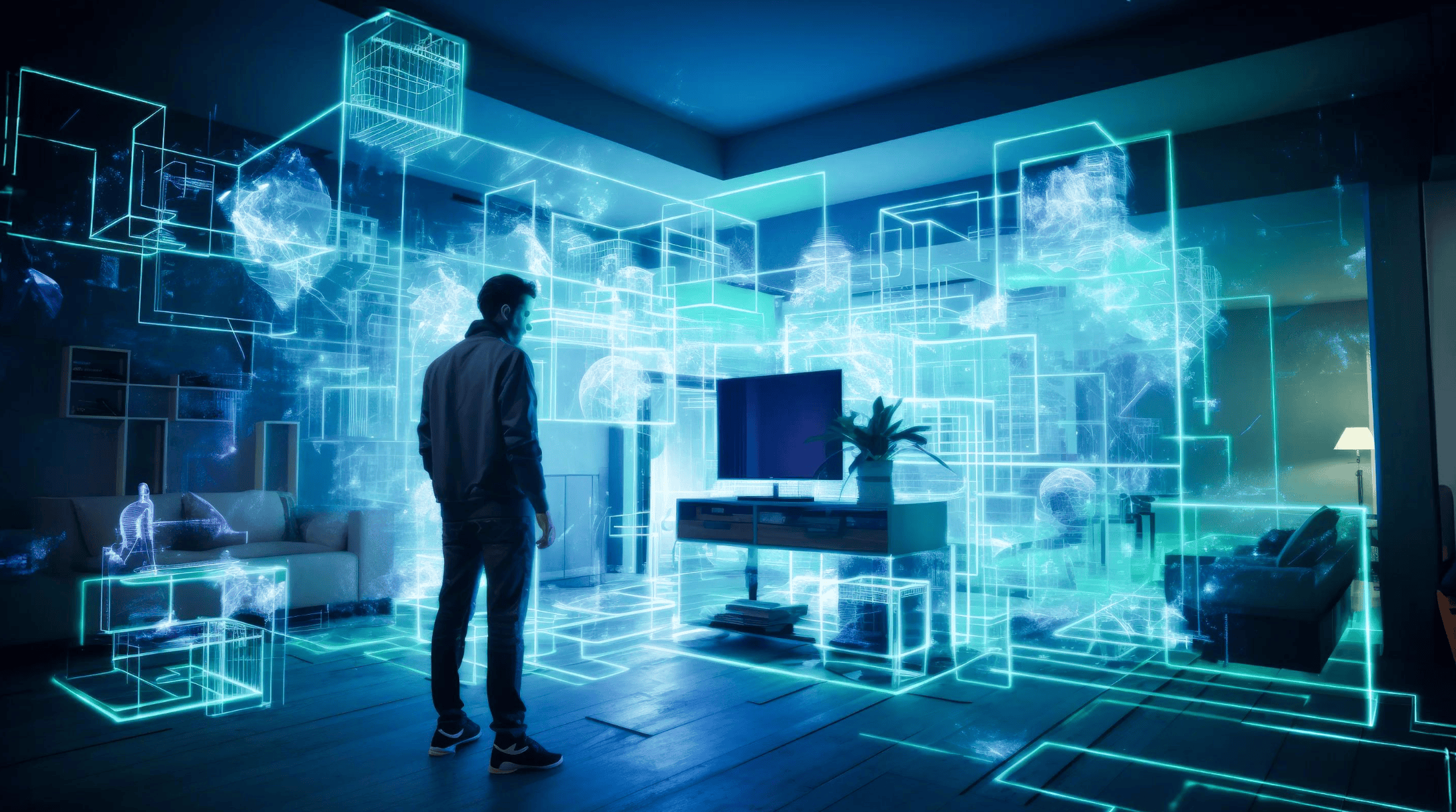
Simulated Perspective
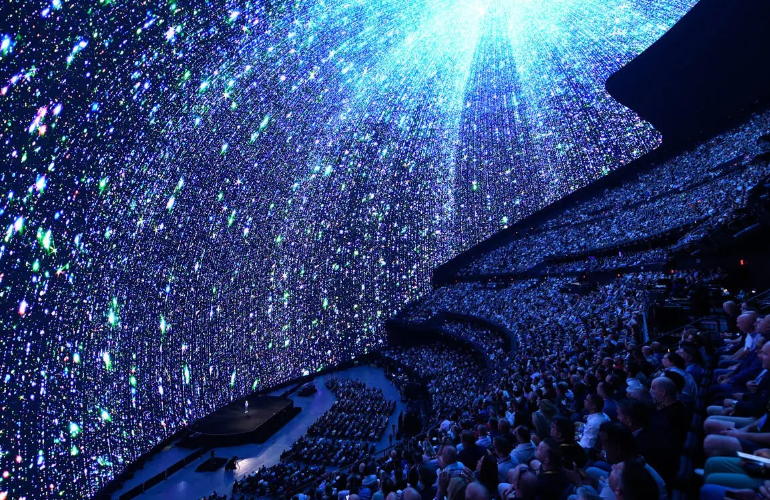
Designed environments and visual representations simulate spatial appearances, depth and immersion.
What a Deeper Knowledge of Perspective Can Do for You
UNDERSTANDING PERSPECTIVE: PRINCIPLES AND FOUNDATIONS
Perspective concerns both how images and views are produced and what they reveal or represent.
A fundamental distinction is made between perspective Types, which identify methods or processes, and perspective Forms, which identify their resulting images, views or apparent forms. Two fundamental classes of perspective processes are also recognised: Viewing or Imaging, through which images are formed or captured, and Projection, through which light, images or spatial information are projected into physical, graphical, optical or simulated space.
These distinctions help us understand how perspective works, explain why different images and appearances arise, identify relationships between perspective systems, and make more informed decisions when interpreting, constructing, creating or transforming images.
“I ALREADY UNDERSTAND PERSPECTIVE.”
We encounter perspective whenever we look at our surroundings, examine photographs, watch films or interpret images on screens. Yet how well do we understand the principles that govern these experiences? Even familiar activities such as drawing and photography involve questions extending into optics, imaging, geometry and visual perception. Exploring these connections can challenge assumptions and reveal unexpected possibilities and solutions.
“Perspective presides over all the functions and delights of the eye, with varied speculation…
Perspective, therefore, must be preferred to all the discourses and systems of human learning.”
“Perspective ‘creates’ a systematic space—it creates room for bodies to expand plastically, and to move gesturally; it enables light to spread out in space!”
“The way we see things is affected by what we know or what we believe.”
7 QUESTIONS THAT CHALLENGE WHAT YOU KNOW ABOUT PERSPECTIVE
| No. | Perspective question | Brief answer | Explanation / Visual Effects |
|---|---|---|---|
| 1 | Is zooming equivalent to moving closer? | No. Zooming changes image magnification and framing without changing the perspective geometry determined by a fixed viewpoint. Moving the camera changes the viewpoint and can alter the relative apparent sizes and positions of objects. | Moving changes relative object sizes and overlaps. Zooming from the same viewpoint preserves these relationships. |
| 2 | Is looking around equivalent to circling an object? | No. Sphere of Vision Perspective looks outward; Sphere of Revolution Perspective views around an object. | One reveals surrounding space; the other reveals different sides of an object. |
| 3 | Can several processes contribute to one image? | Yes. An image may be produced, transformed or displayed through a sequence of different perspective processes, each contributing to its final appearance. PRC calls this relationship Category Chaining. | In cinema, an image may undergo successive optical, geometrical, photographic or digital perspective processes during its capture, transformation, projection and viewing. Each process may alter its perspective characteristics or apparent form. |
| 4 | Can observation scale change apparent shape? | Yes. Changes in observation scale and resolution can reveal different apparent forms and details, even when the underlying physical form remains unchanged. This is part of the Scale–Shape–Size Problem. | A pebble may look smooth yet reveal irregular contours under magnification; finer contours increase its measured perimeter. |
| 5 | Can different spatial arrangements appear unified? | Yes. Blended Scene Perspective can combine different spatial arrangements into an apparently unified scene when viewed from a suitable position. | An Ames room uses a deliberately distorted spatial arrangement that appears normal from a particular viewpoint. This illustrates how different spatial relationships can produce an apparently unified scene while creating misleading impressions of object size. |
| 6 | Do angle and distance cause identical foreshortening? | No. Aspect Foreshortening occurs when a surface is viewed at an angle, making its apparent shape compressed. Optical Foreshortening occurs because different parts of an object are at different distances from the observer, producing differences in their apparent sizes. | A circular disc viewed obliquely appears elliptical (Aspect Foreshortening). An object extending away from the observer exhibits differences in apparent size between its nearer and farther parts (Optical Foreshortening). |
| 7 | Is geometrical vanishing the same as disappearing? | No. Geometrical Vanishing describes how projected forms approach a mathematical limit, such as a vanishing point. Optical Vanishing occurs when an object or its details become too small or indistinct to be seen clearly. | Parallel railway tracks appear to converge towards a vanishing point (Geometrical Vanishing). At great distances, the tracks or their details may no longer be distinguishable (Optical Vanishing). |
How many of these questions can you confidently answer?
They represent only a small part of a field encompassing more than 4,000 specialist terms, approximately 1,200 named types and forms, and over 300 new and refined concepts developed through PRC research.
“WHY IS THIS SO COMPLICATED?”
Understanding perspective requires us to distinguish between interacting processes of light, geometry, viewpoint, instruments and perception. By identifying how these processes operate individually and together, we can better explain their specific effects, recognise their relationships and understand how different appearances arise.
Overview of Perspective Category Theory
Perspective Category Theory (PCT) provides a unified framework for understanding, analysing and classifying perspective across art, science and technology. It explains how spatial reality is viewed, imaged, represented, constructed and transformed.
FACETS OF PERSPECTIVE
PCT distinguishes seven analytical levels: Category, Class, Type, Form, Phenomenon, Function and Product. Category identifies the broad mode; Class the fundamental process; Type the particular method; and Form the resulting appearance. Phenomenon, Function and Product provide further dimensions of analysis.
Perspective involves both a method or process and its resulting appearance or outcome.
OBJECT / TARGET SPACE AND OUTPUT / IMAGE SPACE
Object / Target Space contains the objects, scenes or spatial information being viewed, measured or represented. It may be Physical, Imaginary, Mathematical, Optical, Artificial (Simulated) or Digital, with these kinds sometimes overlapping.
The Output / Image Space, in which an image or appearance is produced or presented, may belong to any of the same six kinds and need not correspond to the Target Space. For example, a mathematical model of a physical scene may produce a digital image on a physical display.
PHYSICAL, APPARENT AND MODELLED FORMS
Three fundamental Kinds of Form are distinguished: Physical Form, the spatial structure of a target object or scene; Apparent Form, its resulting appearance under viewing, imaging or projection conditions; and Modelled Form, the geometrical, mathematical or conceptual models and assumptions used in perspective construction, imaging, analysis or reconstruction, including those embodied in optical instruments and visual systems. The Shape-Sufficiency Model is one example of Modelled Form.
Target Space is generally three-dimensional, containing objects or structures of one, two or three dimensions. Physical Form is a notional term encompassing material forms, actual and represented spatial forms, and optically simulated or projected forms. These may be mathematically defined, physically constructed, digitally simulated or imagined. Consequently, within a Category Chaining process, the image space or output of one perspective system may become the object space or target space of another, with that intermediate output serving as the Physical Form for the next system.
Modelled Form may support Construction (Image/View Construction), generating appearances from spatial forms, or Reconstruction (Spatial Form Reconstruction), inferring possible spatial forms from images or views. These processes need not be exact inverses.
Perspective Processes: Construction and Reconstruction
The Target Space and Output / Image Space may be of different kinds.
Modelled Form may be explicit or implicit, including models embodied within optical imaging systems and other perspective methods.
A single Apparent Form does not always determine one unique source form or target space.
Modelled Form may be used in construction (including imaging), reconstruction or both; it need not be overtly or explicitly constructed, since natural visual systems may employ implicit models and assumptions in processing spatial information.
Construction generates an appearance from spatial form, whereas reconstruction infers possible spatial forms from an appearance; the two processes need not be exact inverses. A single Apparent Form may be consistent with multiple possible spatial forms, structures or interpretations. Consequently, spatial reconstruction does not necessarily yield a unique solution; different Modelled Forms and underlying assumptions may produce different reconstructions of the same observed appearance.
THE COMPLEXITY OF PERSPECTIVE SPACES AND PROCESSES
The preceding diagrams illustrate two fundamental transformations involved in perspective: the construction of images or appearances from spatial forms, and the reconstruction of possible spatial forms from images or appearances. In practice, Object / Target Space and Output / Image Space can take many forms. PRC research identifies approximately 150 named types of three-dimensional space relevant to perspective, including Anamorphic Space, Curvilinear Space, Spherical Space, Blended Scene Space, Combined Space, Composite Space, Manifold Space, Split Space, Accelerated Space, Multi-View Space, Augmented Reality Space, Virtual Reality Space, Volume Display Space (Concave) and Volume Display Space (Convex).
A particular perspective system may instantiate one or more types and forms of perspective, including Composite Perspective, Mixed Perspective, Combined Perspective, Blended Perspective, Manifold Perspective, etc., which may encompass different spaces, methods or appearances, as explained below.
Perspective Modes, Relationships and Complex Systems
Perspective systems can involve several categories, methods and kinds of space, operating in sequence or together. The distinctions below identify how their processes and resulting appearances relate, from individual methods with multiple category memberships to layered, fused or apparently continuous spatial arrangements.
These concepts describe different aspects of perspective systems, including category membership, sequential or simultaneous operation, spatial integration and classification ambiguity. They may concern any of the seven analytical levels of Perspective Category Theory: Category, Class, Type, Form, Phenomenon, Function and Product. These classifications and relationships are not necessarily mutually exclusive.
| Perspective concept | Definition | Practical example |
|---|---|---|
| Modes of Perspective | ||
| Natural Perspective | Perspective arising from physical scenes and their naturally occurring spatial relationships and appearances. | The physical layout of a natural environment, including the spatial arrangement of objects, terrain and atmospheric conditions that influence their appearances. |
| Visual Perspective (Type 2) | Perspective arising from the human visual system’s observation and perception of spatial reality, producing an apparent form through the processes of vision. | Viewing a three-dimensional scene with human eyes, where retinal imaging and visual processing produce an apparent spatial arrangement. |
| Artificial Perspective | Perspective formed or represented by human-devised graphical, optical, instrumental or computational methods. | A linear-perspective drawing of a street. |
| Synthetic Perspective | Synthetic Perspective arises when natural and artificial perspective processes are brought together to produce an integrated spatial image, view or appearance. | An anamorphic image distorted by a curved mirror. |
| Simulated Perspective | Simulated Perspective involves the deliberate construction or modification of physical, graphical, optical or digital spatial forms and relationships to produce selected appearances or effects, including visual illusion and immersion. | Forced-perspective environments, anamorphosis, stereoscopic imaging, computer-generated worlds and virtual reality. |
| Relationships and Classification Distinctions | ||
| Category Chaining | Sequential operation of different perspective categories, with successive processes contributing to the resulting image or view. | Natural SceneOptical / Instrument ImagingNew Media ProcessingInstrument / New Media DisplayVisual Perspective (Type 2) Successive perspective processes contributing to the final visual appearance. |
| Category Overloading | Category Overloading occurs when a particular perspective system, type, method or process legitimately belongs to two or more top-level Perspective Categories simultaneously. This represents a form of classification ambiguity arising from multiple legitimate category memberships. | A computer-generated linear-perspective scene may simultaneously instantiate Mathematical, Graphical, Simulated and New Media Perspective Categories. |
| Class Chaining | Class Chaining occurs when two or more distinct perspective operations or subsystems, involving both the Viewing/Imaging and Projecting Classes, are connected sequentially. The sequence may begin with either Class and involve multiple alternating stages. | A laser show is projected onto a concert stage, captured by a camera, and subsequently projected onto a large screen. ProjectingViewing / ImagingProjecting Separate systems operating sequentially |
| Class Overloading | Simultaneous operation of Viewing/Imaging and Projection within a single perspective process or system. Such a system may sometimes also be classified as Mixed Perspective. | An augmented-reality system simultaneously images its surroundings and projects or displays digital information. Viewing / ImagingProjection Simultaneous operation; the symbol does not imply bidirectional information flow. |
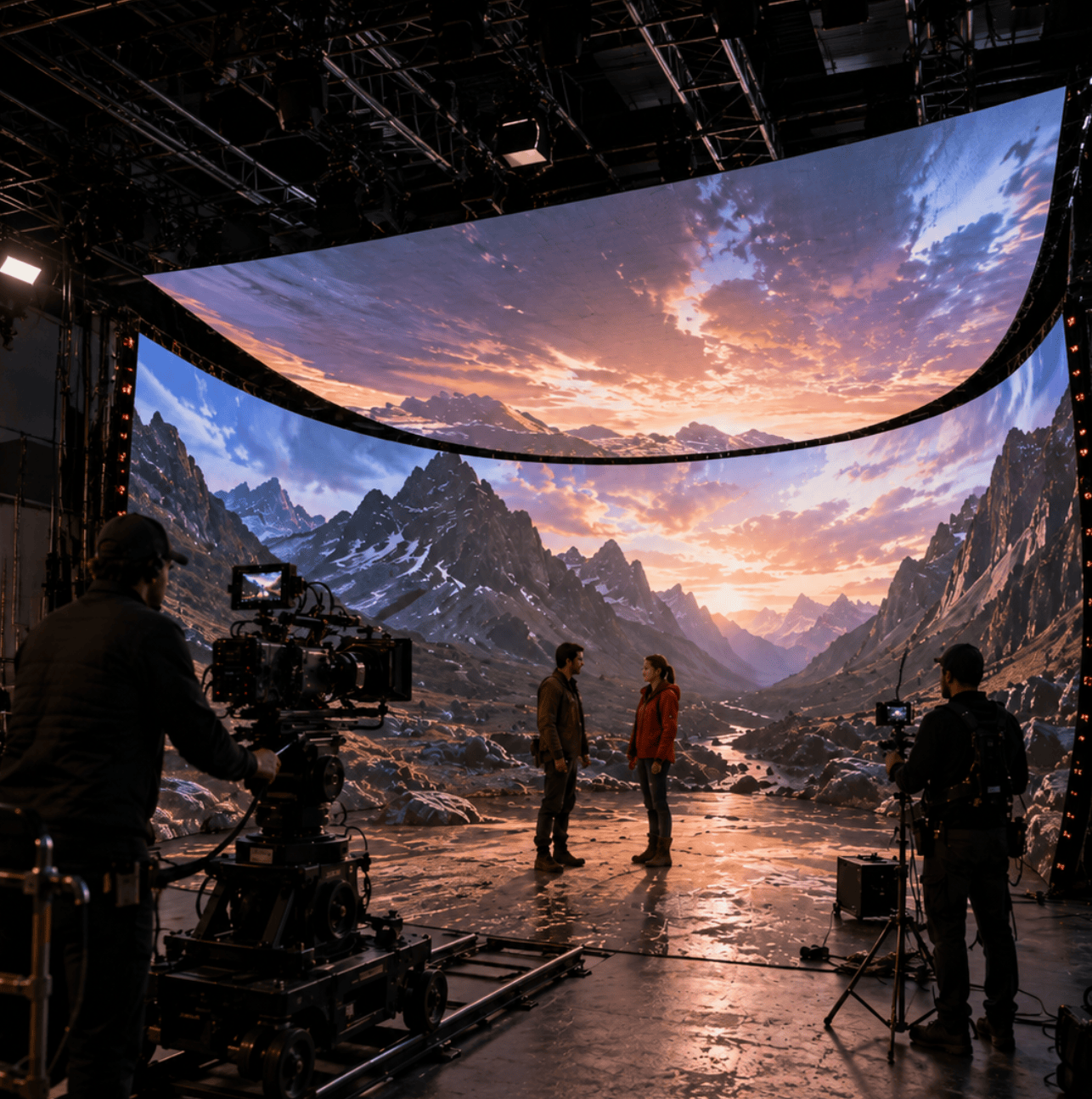
| Composite Perspective | Composite Perspective occurs when two or more Perspective Categories contribute to a perspective process, system, image or environment, whether sequentially or together. It may involve Category Chaining, Category Overloading, or both. | Virtual film production bringing together optical camera imaging, CGI, projected backgrounds and physical scenery. |
| Mixed Perspective | A perspective system involving both Viewing/Imaging and Projection, whether the two Classes operate sequentially, simultaneously or through physical interaction. Class Chaining and Class Overloading describe particular relationships within such systems. | A camera recording actors against a projected background, combining optical imaging and image projection. Mixed PerspectiveViewing / ImagingProjection Both Classes are involved; their temporal relationship is unspecified. |
| Combined Perspective | Combined Perspective (Layered / Aligned / Fused Spaces): Combined Perspective occurs when two or more distinct perspective views, images, methods or spaces are intentionally brought together within one resulting view or image. The components may remain visually distinguishable or appear spatially unified. | Augmented reality displaying a digital overlay within a view of physical surroundings. |
| Blended Scene Perspective | Blended Scene Perspective (Fused Spaces): Blended Scene Perspective is a specific form of Combined Perspective in which two or more separately structured spatial geometries are made to appear as one continuous, unified scene, concealing their underlying spatial differences. | A physical film set appearing to extend seamlessly into a digitally generated landscape. |
| Blended Image Perspective | Multiple images or views merged into a unified image space. | Several overlapping photographs blended into a panorama. |
| Manifold Perspective | Multiple images or optical overlays visible simultaneously along a single line of sight through reflection, transparency or related optical effects. | Seeing your reflection and a shop interior through a glass window, or multiple reflections in an infinity mirror. |
| Type/Form Ambiguity | The same perspective term is used to describe both a perspective Type (method or process) and a perspective Form (resulting appearance or outcome). This is a form of Classification Ambiguity arising from the use of one term for two distinct analytical levels. | Linear Perspective may refer either to a geometrical construction method or to the resulting perspective appearance of converging lines. |
Note: This table shows only a small selection of the 4,000+ terms and approximately 1,200 named perspective types and forms covered by the Dictionary of Perspective.
What Problems Can Perspective Category Theory Solve?
Perspective Category Theory provides a unified framework for analysing perspective types, processes and systems across art, science and technology. By identifying their underlying methods, spatial relationships, phenomena and resulting appearances, it enables researchers and practitioners to distinguish different perspective processes, explain how particular appearances arise, understand how perspective systems interact or combine, and select or develop more effective visual, optical and computational methods.
ONLINE LEARNING
You can explore perspective and its many concepts progressively, at your own pace, through PRC’s 400+ online articles, subject navigation maps, Dictionary of Perspective and Library of Perspective.
“WHAT WILL I GAIN?”
A deeper understanding of perspective improves your ability to interpret images, analyse spatial appearances, select appropriate methods and recognise misleading assumptions.
It supports more informed work in drawing, photography, measurement, modelling, imaging, simulation and immersive environments—and opens new possibilities for explaining and creating visual experiences.
The Dictionary of Perspective: A Landmark in the Science of Vision
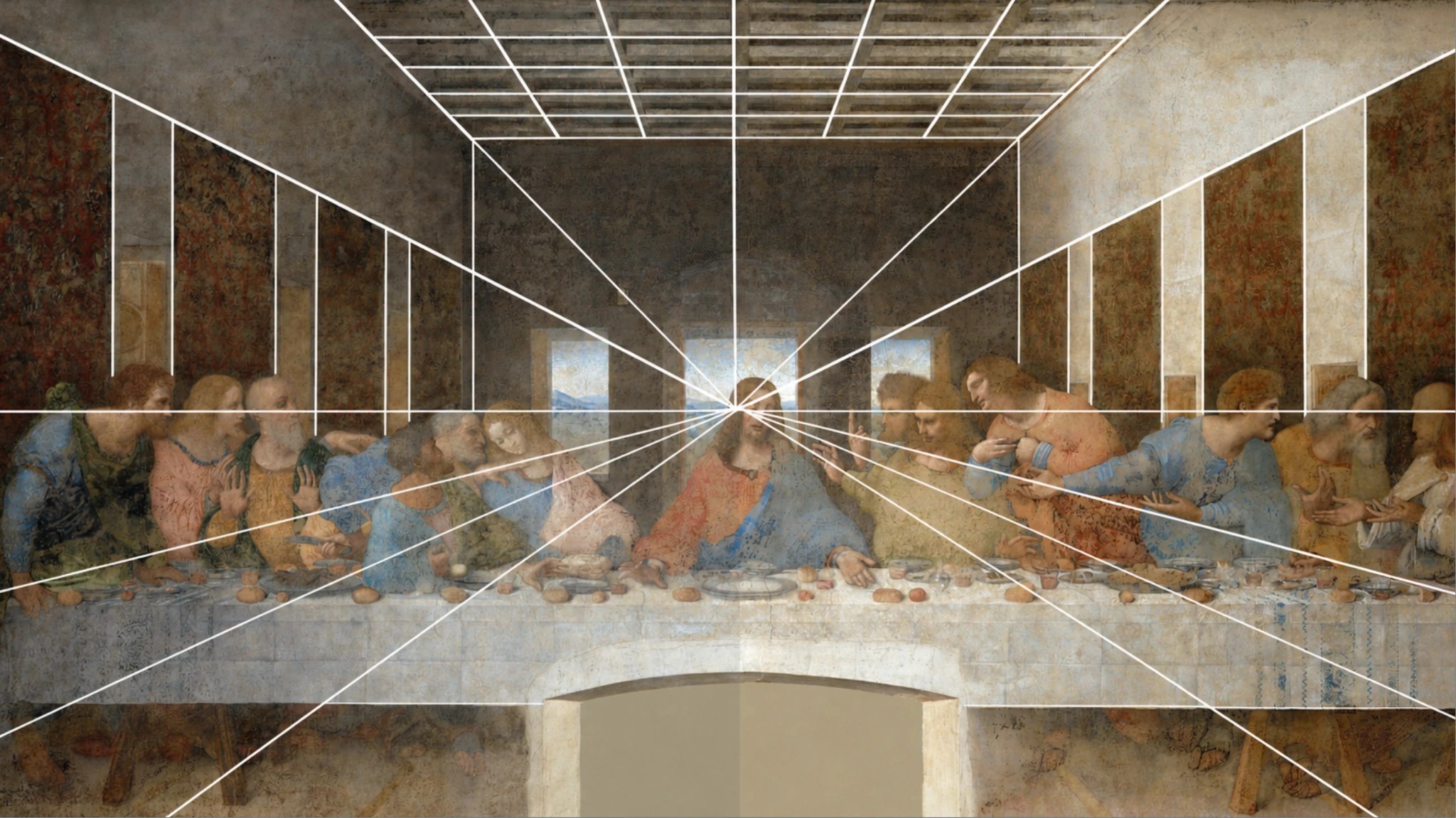
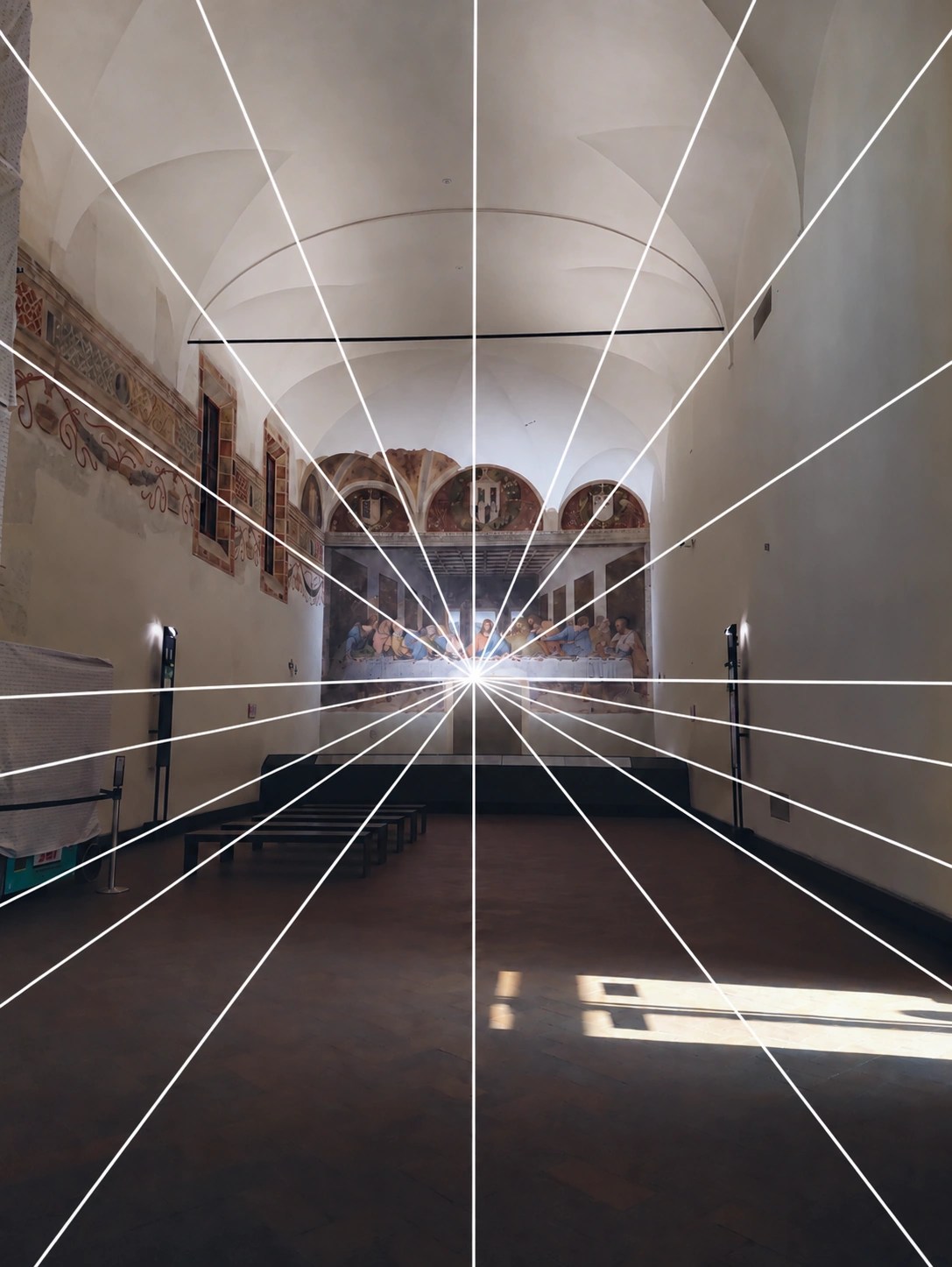
share a vanishing system: Combined Perspective.
 Circle of Vision Perspective
 Curvilinear Perspective Panorama
 360° Circular Perspective — Little Planet Forms
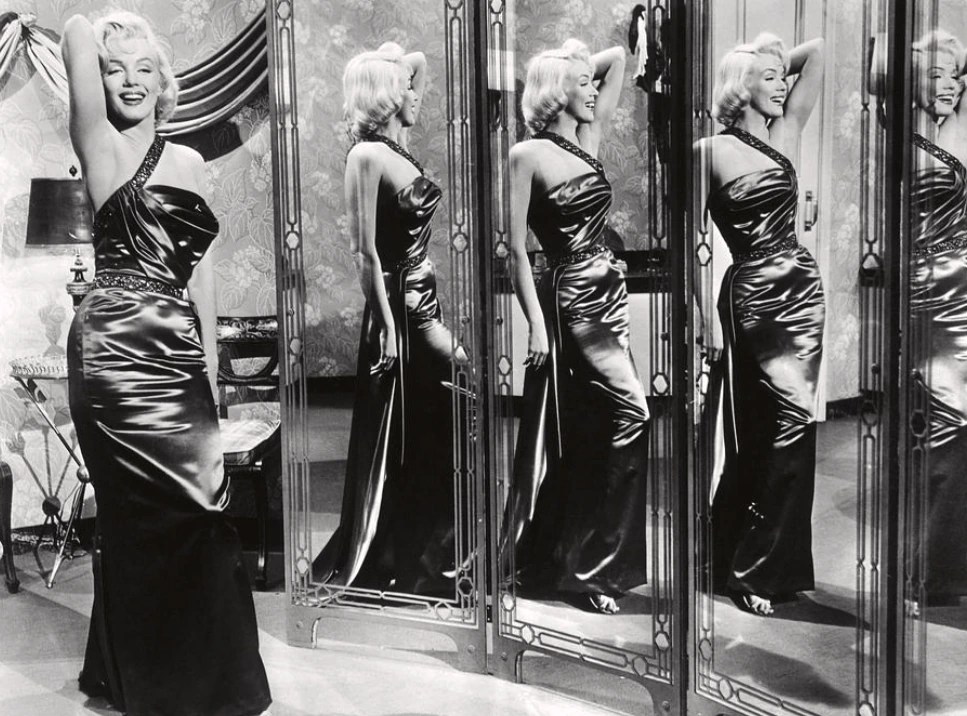 Multi-View Mirror Perspective
 Blended Perspective — Physical and Digital Space
Introducing the Dictionary of Perspective
The Dictionary of Perspective provides a connected reference to perspective methods, visual phenomena and terminology across disciplines. Covering more than 4,000 terms and approximately 1,200 types and forms, it clarifies concepts and relationships between perspective systems.
An Extensive Network of Perspective Knowledge
Beyond its 4,000 terms and 1,200 named types and forms, the Dictionary contains approximately 10,000 cross-reference occurrences, connecting synonyms, alternative terminology, historical expressions, different meanings and related concepts. These connections were established through direct consultation and study of the Perspective Research Centre’s physical 5,000-volume Library of Perspective, including the examination of original books, scholarly papers and specialist publications, rather than generated by artificial intelligence. Together, they form an interconnected system of perspective knowledge across art, science and technology.
WHAT IT CONTAINS
- Natural and visual perception — viewpoint, depth, scale and appearance.
- Optics and imaging — lenses, cameras, mirrors and image formation.
- Geometry and representation — linear, parallel and graphical methods.
- Architecture, art and design — drawing, painting and visual communication.
- Photography, cinema and visual effects — camera methods, animation and constructed realities.
- Computer graphics and digital worlds — CGI, AI, computer vision, VR and AR.
- Scientific and technical imaging — measurement, modelling, mapping and instruments.
HOW READERS CAN USE IT
SEARCH — Discover and Understand
Look up a term to clarify its meaning, distinguish it from similar concepts and understand how it is used in different contexts. Discover unfamiliar kinds of perspective, previously unrecognised phenomena and relationships, and concepts rarely addressed in conventional treatments.
COMPARE — Distinguish Methods and Effects
Compare types and forms of perspective to investigate the methods, spatial relationships and visual effects involved in an image, view or constructed environment. Explore how optical, geometrical and perceptual processes interact, sometimes producing similar appearances through distinct methods.
INVESTIGATE — Explore Relationships and Develop Insights
Investigate connections between familiar techniques and less familiar phenomena, using the Dictionary’s classifications to organise questions, challenge assumptions and develop new insights. For students, educators, artists and researchers, it offers a shared vocabulary and systematic framework to analyse images, compare methods and explain perspective more precisely.
The Dictionary also reflects extensive original scholarly research, identifying terminology directly from historical books and specialist publications. It connects expressions used across different centuries and disciplines, distinguishes between equivalent, related and different concepts, and organises these relationships into a systematic reference network.
Overall, the Dictionary can expand your capacity for visual problem-solving, helping you discover new possibilities and develop more effective solutions.
The Many Worlds of Perspective
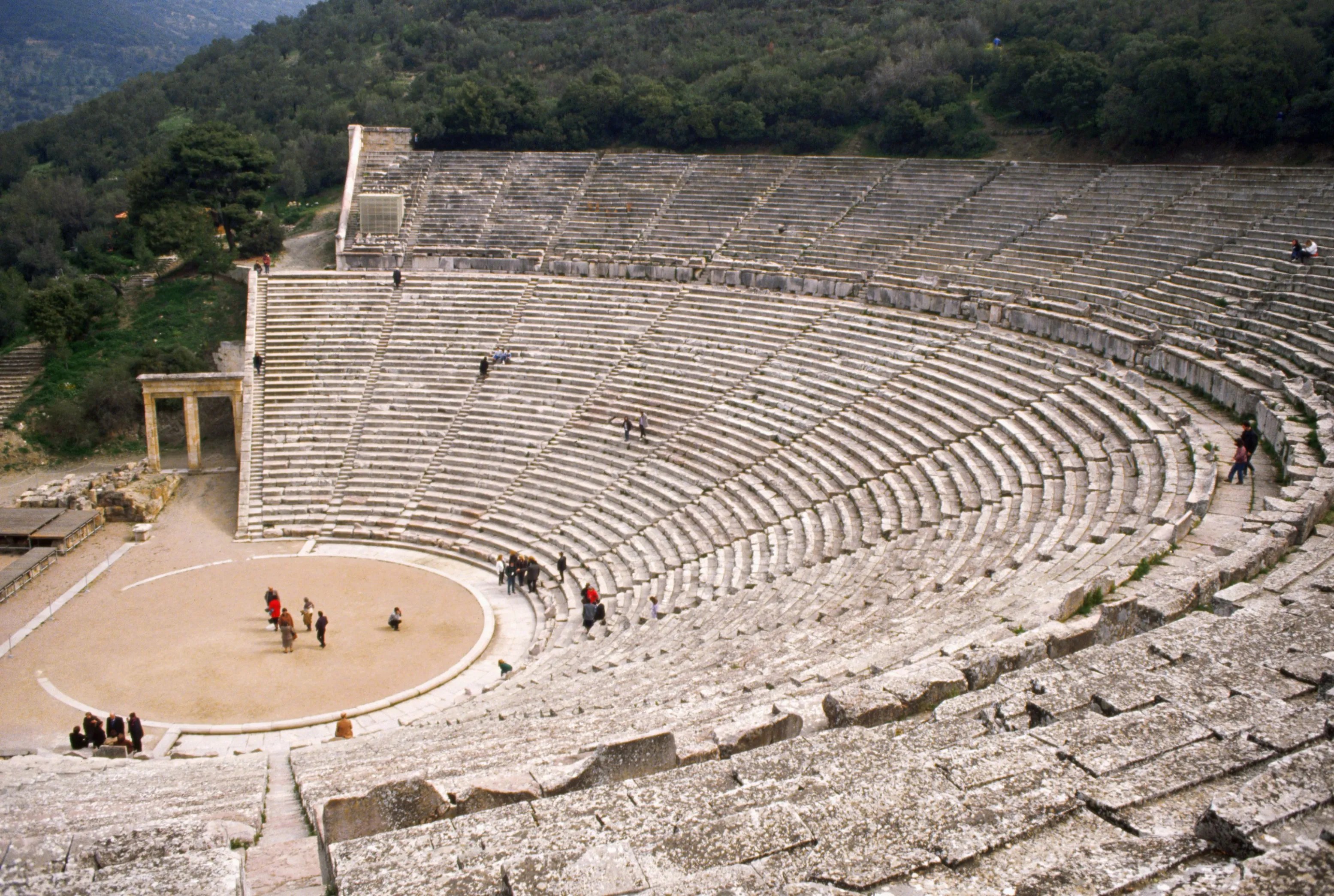
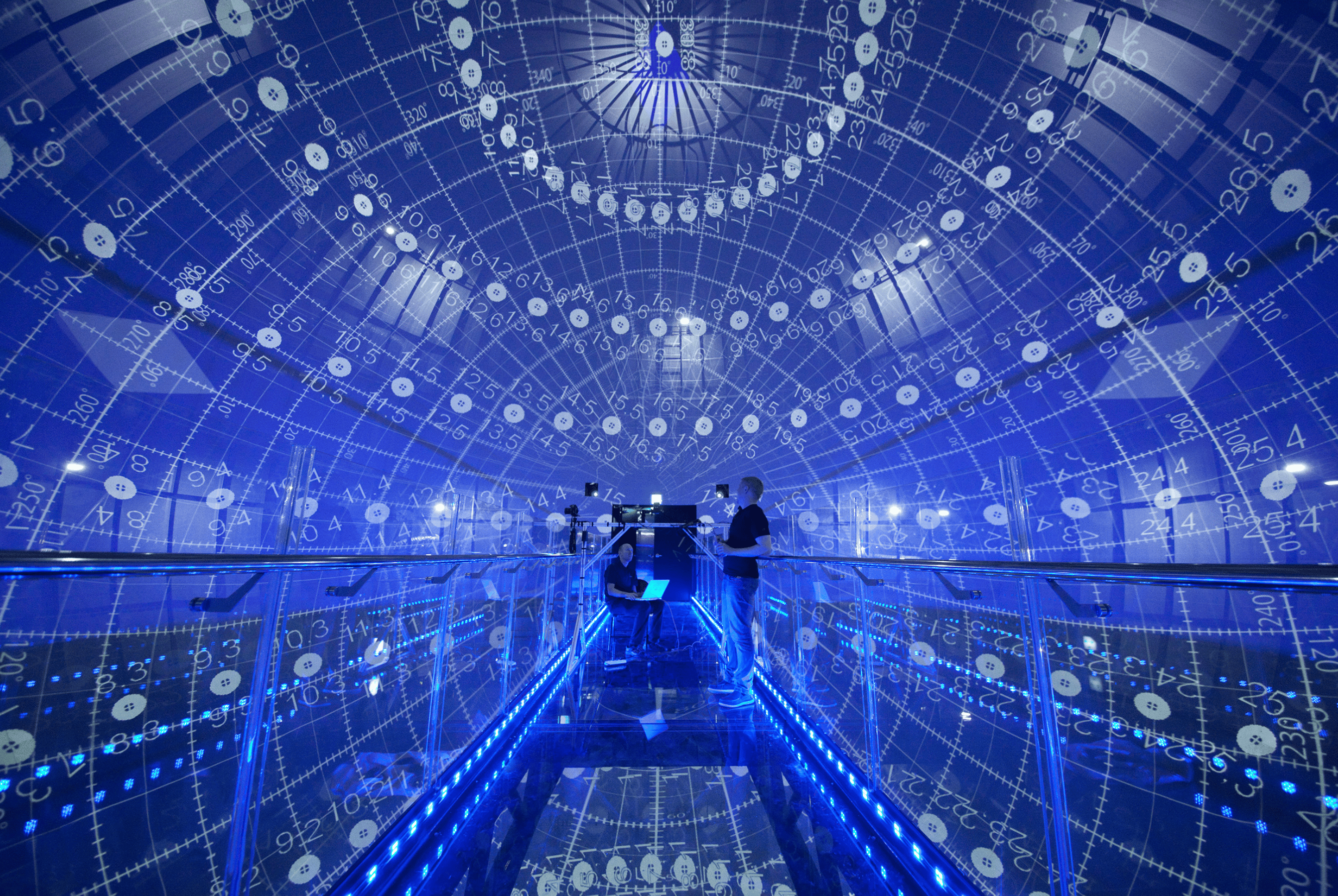
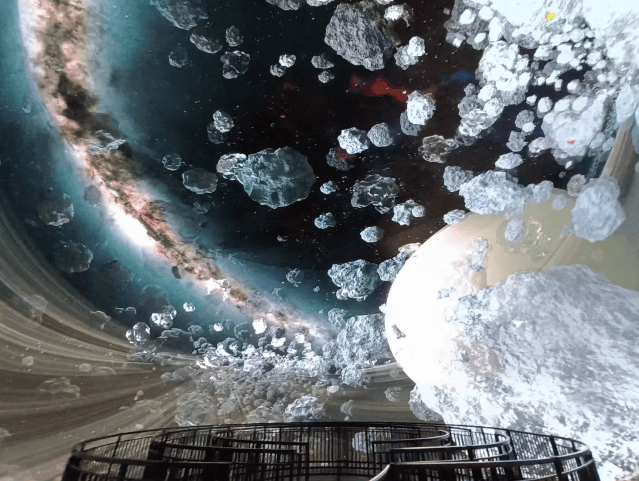
Explore Perspective
New to Perspective?
Start with the basic definitions, history and core concepts of perspective.
Start with the Basics →Perspective Theory & Concepts Catalogue
Explore the theories, concepts, principles and classifications that structure the field of perspective.
Browse Theory & Concepts →Applications of Perspective Catalogue
See how perspective is used across art, architecture, science, technology and other fields.
Browse Applications →Common Errors & Misconceptions
Explore recurring historical and technical errors in teaching, textbooks and explanations of perspective.
Errors & Misconceptions →People in Perspective Catalogue
Discover key figures, researchers, artists and thinkers in the history and development of perspective.
Browse People →Timeline of Perspective Developments
Follow key developments, people and milestones across the history and development of perspective.
View the Timeline →Films & Lectures
Explore selected films, documentaries and recorded lectures on perspective and related subjects.
View Films & Lectures →Tutorials & Guides
Practical guides and tutorials for learning and applying perspective.
Explore Tutorials & Guides →PRC Video Lectures & Tutorials
View Lectures & Courses →What Is Perspective?
Introductory video lecture
Using the Dictionary
Practical video tutorial
Exploring the Digital Library
Practical video tutorial
Featured Projects & Resources
Explore All Projects & Resources →
Leonardo da Vinci Studies
Kim H. Veltman’s multi-decade research on Leonardo’s perspective, optics, vision and astronomy, including extensive unpublished and archival material.
His studies examine how Leonardo connected drawing, geometry, visual perception and light within Renaissance knowledge. PRC preserves this research through the Kim Veltman Archive and its Leonardo collections.
View Project →
Alphabets of Life
A major interdisciplinary project by Kim H. Veltman exploring alphabets, signs, symbols, knowledge systems and cultural information across periods and cultures.
It examines how notation, language, image and symbolic representation have shaped the organisation and transmission of knowledge, from historical writing systems and visual symbolism to modern digital culture.
Read Book in Digital Viewer →
Encyclopaedia of Perspective
Kim H. Veltman’s eight-volume, approximately three-million-word Encyclopaedia of Perspective brings together sources, bibliography and research across art, science and technology.
It traces perspective through optics, geometry, architecture, visual representation, instruments and imaging technologies, revealing a field extending far beyond conventional linear perspective.
Explore the Encyclopaedia →Recent Research & Updates
Tutorials, guides and learning resources for students, educators and professionals.
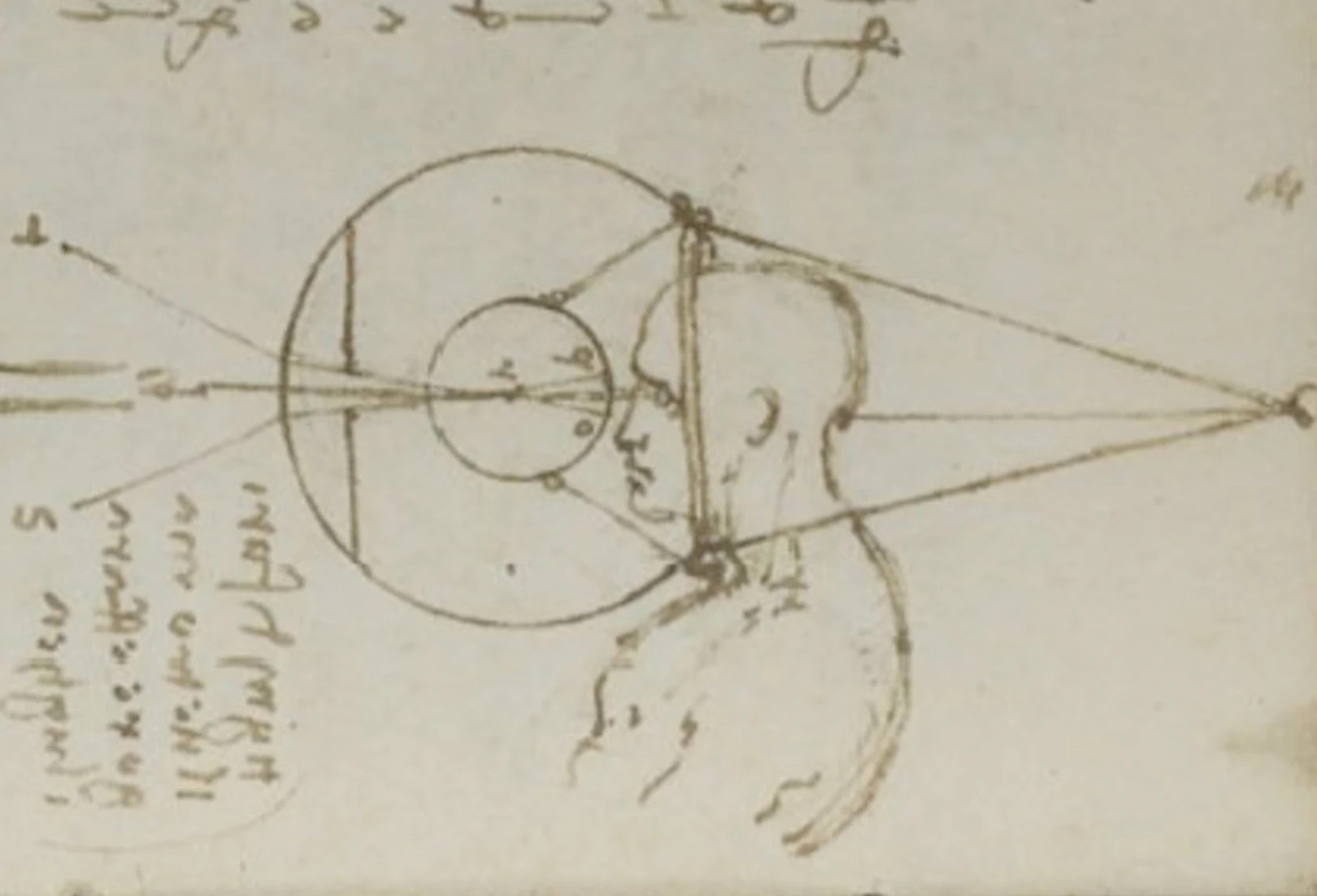
New archival scans clarify how Veltman’s Leonardo studies changed from one large optics project into multiple substantive volumes.
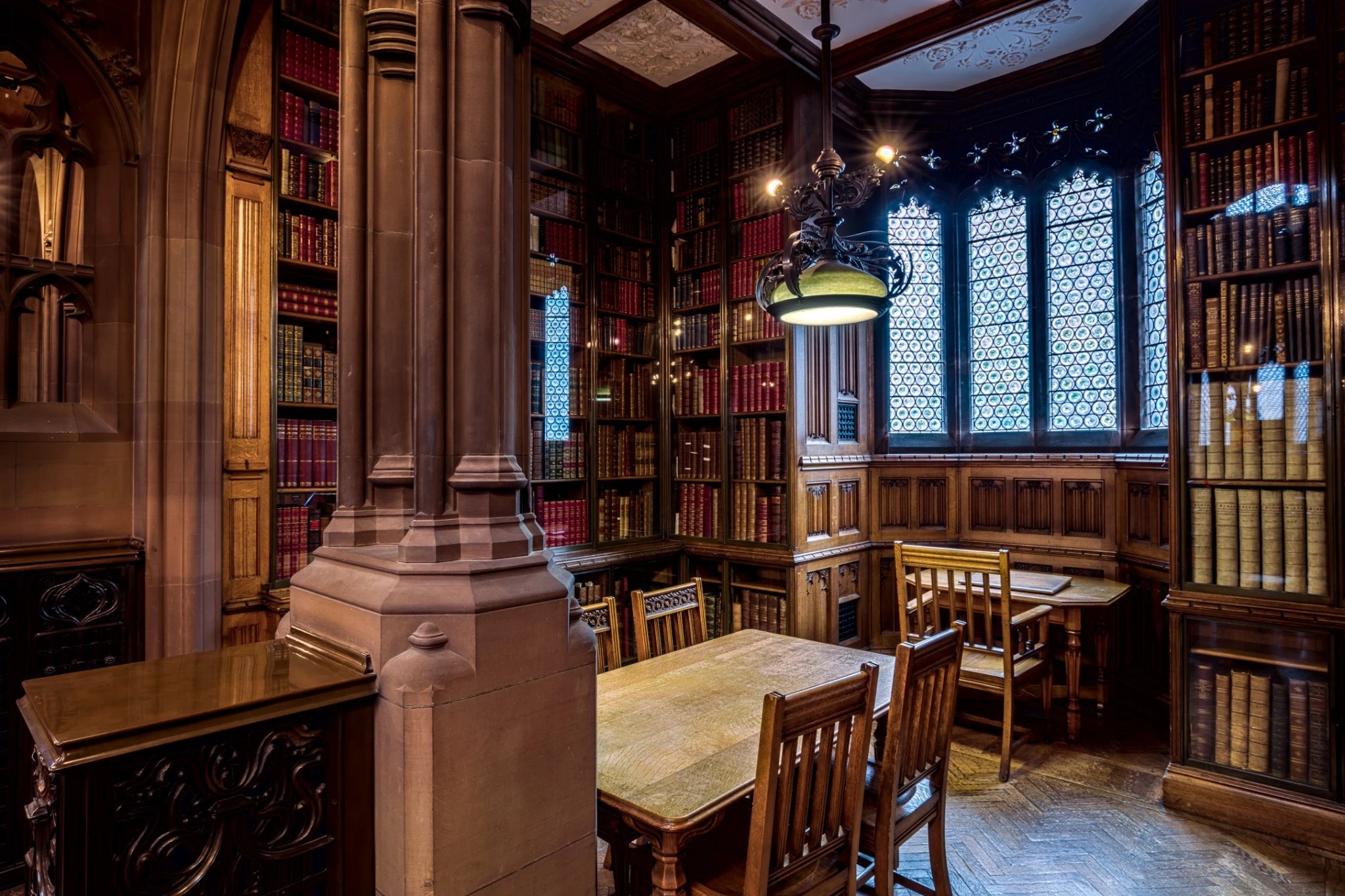
Reader interaction, Digital Library search and multi-context research continue to be integrated across PRC.
Perspective Today
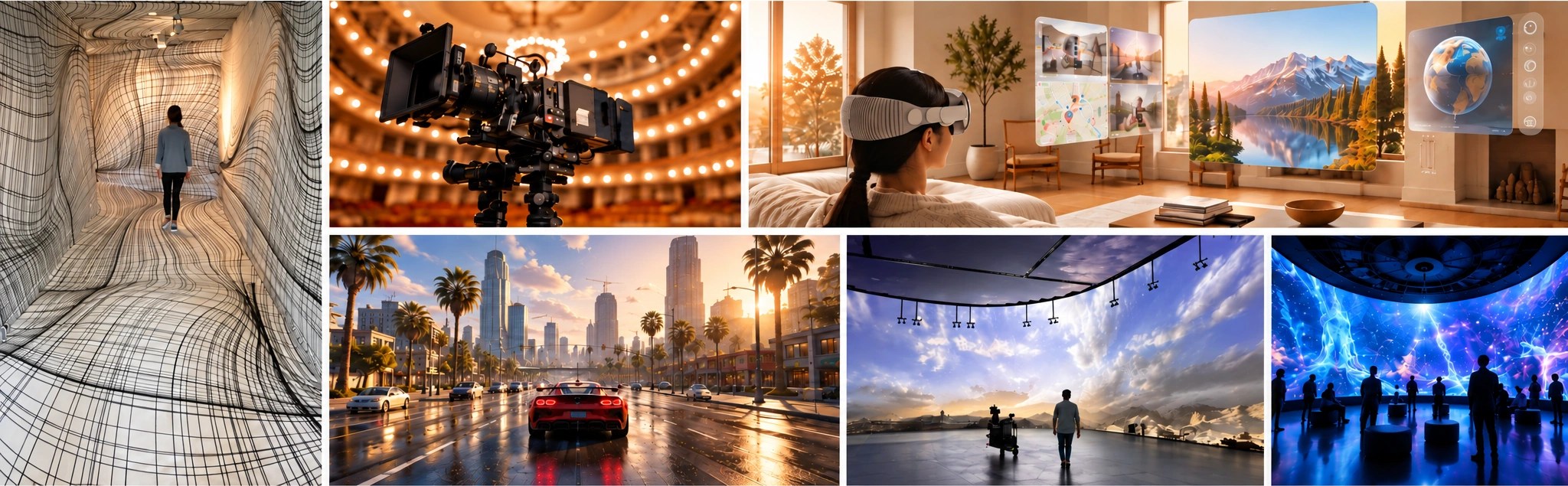
A new understanding of what perspective is, how it operates,
and why it matters across the visual arts, sciences and technologies.
The Art and Science of Perspective
The Art and Science of Perspective is a multi-volume series tracing visual and optical perspective from antiquity to the digital age. It brings together historical research, technical explanations, visual phenomena and new theoretical concepts.
The series examines both natural perspective—how spatial reality appears to vision—and artificial perspective—how it is captured, projected, constructed and transformed. Its applications range from drawing and photography to scientific imaging, computer graphics and immersive environments.
The Past, Present and Future of Visual and Optical Perspective
Second Edition
A wide-ranging introduction to the history, theory, applications and future possibilities of visual and optical perspective.
Large-format 8.5 × 11-inch paperback
US$27.99
Dictionary of Perspective
Second Edition
The first comprehensive dictionary and taxonomy devoted specifically to visual and optical perspective.
Approximately 1,200 types and forms
More than 350,000 words · 590 pages
Large-format 8.5 × 11-inch paperback
US$34.99
Natural and Visual Perspective
Forthcoming First Edition
A new account of how spatial reality gives rise to natural appearance—and how natural appearance becomes human visual experience.
Large-format 8.5 × 11-inch paperback
Expected Price: US$27.99
Featured Perspective Researchers

Tomás García-Salgado
Architect · perspective researcherExplore Modular Perspective, reverse outlining and methods for reconstructing spatial relationships from perspective images.
Modular Perspective → Perspective Geometry →
Dick Termes
Artist · spherical perspectiveArtist and creator of the Termesphere, using six-point spherical perspective to represent complete surrounding environments.
Explore Termespheres →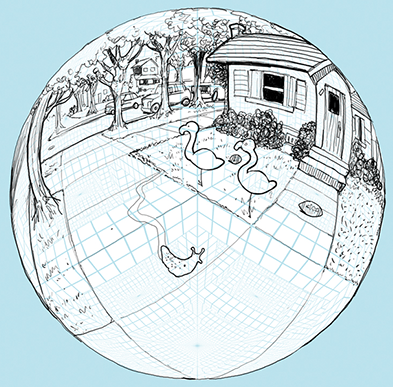
David Chelsea
Artist · author · perspective teacherArtist, author and teacher known for practical, curvilinear and experimental approaches to perspective.
Explore David Chelsea →Conclusion: Perspective as Visual Knowledge
GEOMETRY AND PHYSICAL REALITY
Perspective connects geometry with physical reality. Kim H. Veltman described linear perspective as a meeting point between geometry and nature, linking the ideal with the actual. Its broader purpose is visual knowledge: helping us observe, measure, model and interpret the relationship between the world, its appearance and its representation.
Linear perspective allows us to organise successive planes or spatial layers within an image, conveying information from several layers at once wherever nearer elements do not obscure those behind them. It also supports model-making: reducing complex objects to essential lines and geometrical relationships. In Veltman’s account, these models connect abstract geometry with physical things, helping us describe and classify the natural world.
A CONNECTED FIELD OF KNOWLEDGE
Perspective therefore extends far beyond drawing. Across Western and non-Western traditions, it contributes to understanding how the world is seen, represented and transformed. Its development across art, optics, geometry, vision, architecture, photography, cinema, cartography, computer graphics and scientific imaging has produced many specialised methods and theories. These are often studied separately, although their principles, phenomena and applications are deeply connected.
Many of these connections remain only partly understood. What is needed is an overarching framework that relates methods across disciplines while preserving their differences. This would help us distinguish visual effects, compare explanations and understand how different forms of perspective operate together.
The Perspective Research Centre brings these strands together through Perspective Category Theory, the Dictionary of Perspective, specialist collections, original research and digital knowledge systems. It investigates complexities and unanswered questions while developing clearer explanations and a connected framework. PRC seeks to make perspective coherent, navigable and intelligible as a distinct field, establishing a case for its study and teaching in its own right.
WHY THIS APPROACH MATTERS
This approach matters because clearer understanding makes more precise analysis, comparison and communication possible. It helps readers identify the methods behind an image, relate visual appearances to spatial arrangements, and apply knowledge from one discipline to another. Combining previously separate methods can also reveal unanswered questions and open possibilities for teaching, research and practical innovation.
Perspective enables us both to understand reality and to construct new appearances, physical structures and spatial experiences. Its applications span observation, drawing, photography, cinema, scientific imaging, simulation, illusion, immersive environments, virtual and augmented reality, computer graphics and artificial intelligence. It helps us interpret existing visual worlds and create new ones.
Perspective remains central to modern visual technologies. Its importance grows as images, simulations, spatial data and immersive environments play larger roles in research, communication and everyday life. With a rich past and an active present, perspective continues to shape developments across art, science, engineering and technology—a foundation for visual knowledge and future innovation.
— Alan S. Radley, Director, Perspective Research Centre
Natural + Artificial Image Content
Conferences, Symposia & Workshops
ALAIPO is an international non-profit association for researchers, students, teachers and professionals in Human–Computer Interaction and qualitative communication.
ALAIPO Conferences → AINCI Conferences →“Leonardo was the first to demonstrate quantitatively the laws of linear perspective… he discovered that (linear) perspective is governed by a simple inverse size/distance law… and he demonstrated that… perspective served as a universal alphabet of idealised geometrical forms. And these abstract, idealised forms were, in turn, related back to idealised, real objects thus making the bridge between geometry and the natural world.”
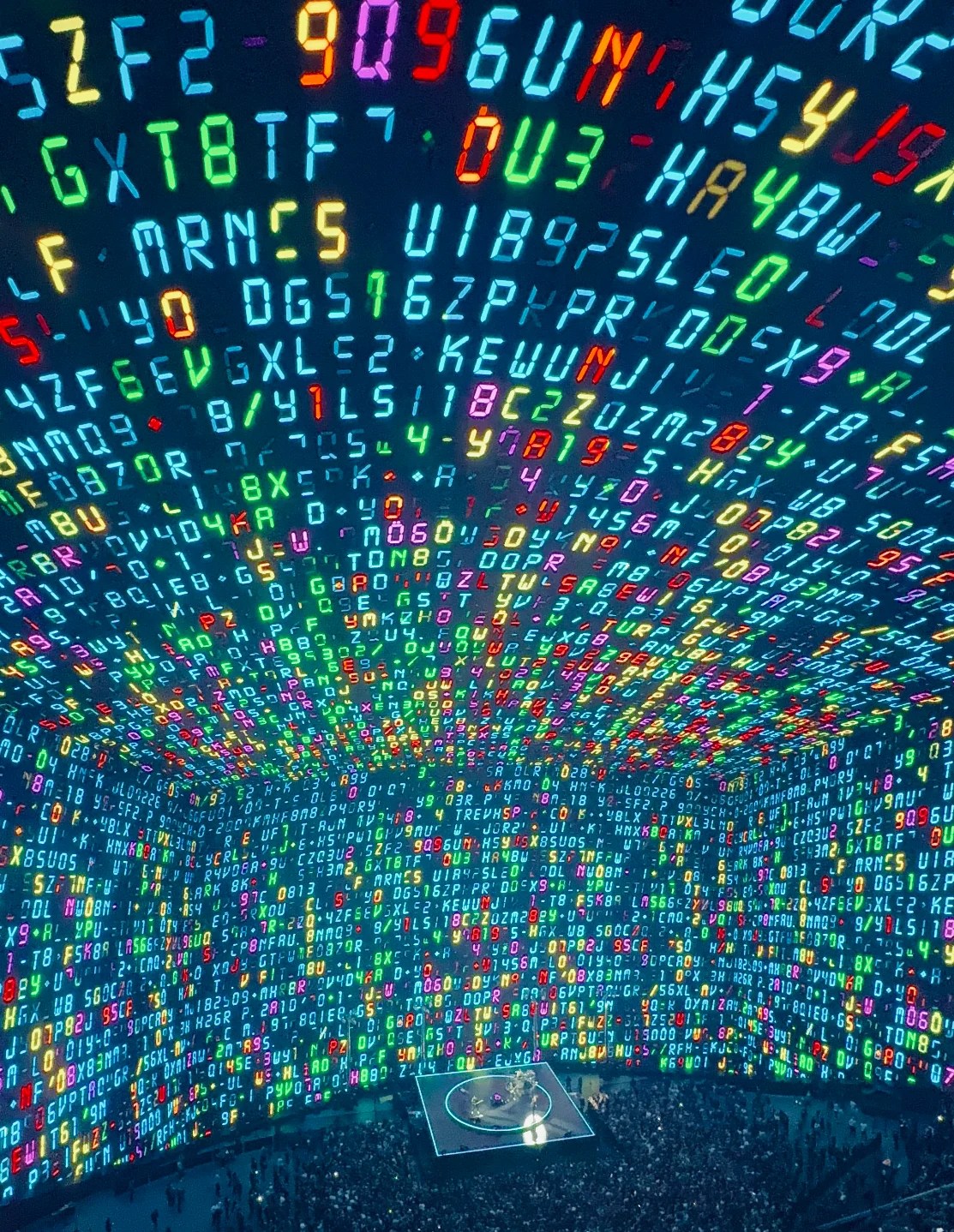
Academic Heritage
More than Four Decades of Research and Intellectual Collaboration
PRC builds on more than four decades of interdisciplinary research in perspective, optics, visual perception and knowledge organisation, shaped by an international network of scholars. Central to this heritage is Professor Kim H. Veltman (1948–2020), Director of the Perspective Unit at the University of Toronto’s McLuhan Program. PRC continues this intellectual tradition through its Kim Veltman Archive, Bibliography of Perspective, Universal Knowledge System and Dictionary of Perspective.
Selected Scholars and Intellectual Connections
| Scholar | Connection to PRC’s Intellectual Heritage |
|---|---|
| Professor Kim H. Veltman | Led four decades of research on perspective, Leonardo studies, visual knowledge and bibliography. |
| Professor Sir Ernst Gombrich | Supervised Veltman’s doctorate, advised on perspective and reviewed manuscript sections. |
| Professor Marshall McLuhan | Taught and influenced Veltman at the University of Toronto. |
| Professor B. A. R. Carter | Professor of Perspective at the Royal Academy Schools; advised on and reviewed Veltman’s manuscripts. |
| Professor Francisco V. C. Ficarra | Supports PRC’s work in human–computer interaction and communication. |
| Dr Alan Stuart Radley FRSA | Senior Research Fellow at the Maastricht McLuhan Institute for 20 years; founder and Research Director of PRC. |
 Art
Art Science
 Technology
 Architecture
 Visual Culture
 Knowledge
 Society