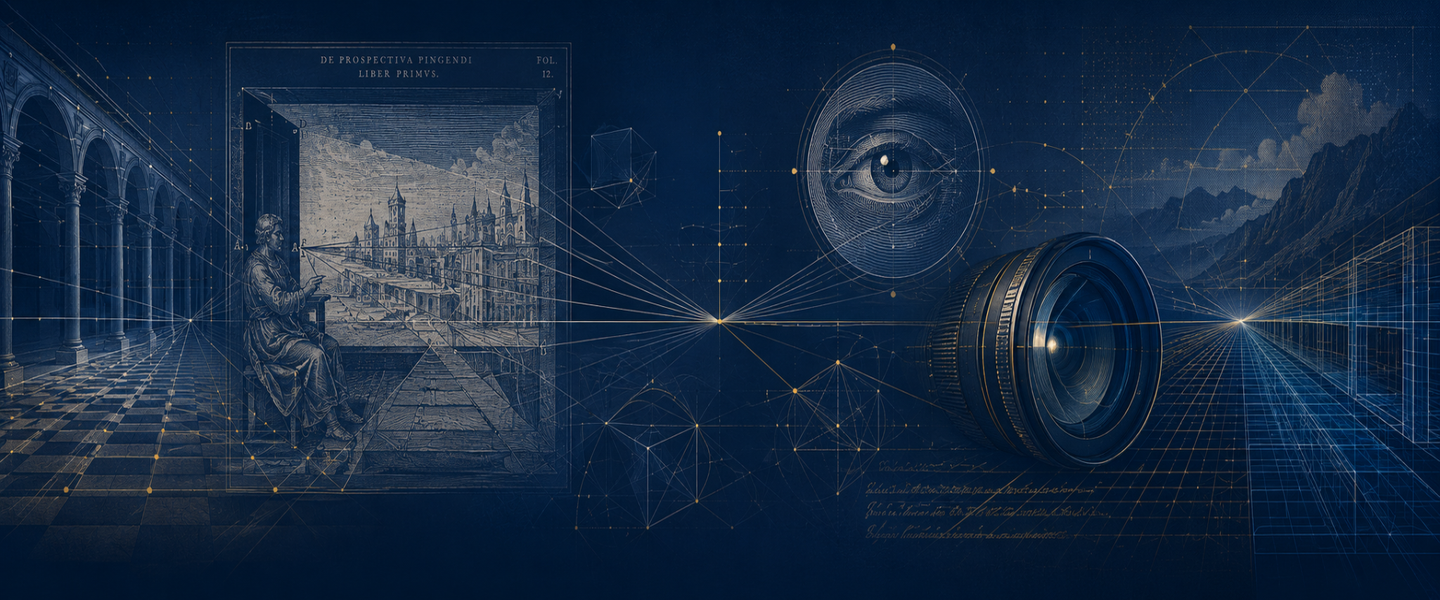

Stereography is the art, process, or technique of delineating the forms of solid bodies on a plane; and the term also refers to stereoscopic photography designed to be viewed with human stereoscopic or binocular vision.
Stereographs
A stereograph (also known as a stereoview or stereocard) is a pair of nearly identical images on cardstock that create a 3-D illusion when viewed through a stereoscope. Invented in 1832 by Sir Charles Wheatstone, it was the first mass-produced photographic medium, foreshadowing modern virtual reality and 3-D or stereoscopic photography and 3D cinema/films.
How Stereographs Work
- Binocular Disparity: The technique mimics human vision. Because our eyes are spaced roughly 2.5 inches (7 cm) apart, each eye views the world from a slightly different angle.
- Dual-Lens Capture: Stereographs were typically captured using special cameras equipped with two side-by-side lenses. Twin exposures are taken simultaneously with slightly altered perspectives.
- Optical Convergence: When you place the card into a stereoscope, the viewer’s lenses force your left eye to see only the left photo and your right eye to see only the right photo. Your brain instantly fuses them, creating an immersive sense of volume and physical space
Historical Timeline and Evolution
- 1832 (The Discovery): Sir Charles Wheatstone discovered stereoscopy using geometric drawings and an elaborate system of mirrors before practical photography existed.
- 1849–1851 (The Global Craze): Sir David Brewster improved the design by replacing mirrors with compact lenses. He showcased his new stereoscope at the 1851 Great Exhibition in London, which was famously seen by Queen Victoria and sparked a consumer craze.
- 1861 (The Holmes Viewer): American physician Oliver Wendell Holmes invented the affordable, handheld wooden stereoscope tracker. This device became common in many middle-class Victorian homes.
- 1870–1920 (The Golden Age): Publishers like the Keystone View Company sold millions of stereographic cards of places around the world when most people could not travel to exotic destinations.
- 20th / 21st Century Legacy: The technology directly laid the groundwork for the mid-century View-Masterchildren’s toy, 3D glasses, and digital VR headsets.
Stereoscopy: binocular vision
3-D perspective (visual type) is any type of stereoscopic perspective view that gives a human being an impression of depth by using his/her binocular vision or binocular perceptive system.
Humans have binocular vision, which means there is an overlap of a portion of the visual world perceived by each eye (each eye sees the same object from a slightly different viewing angle). This binocularity of human vision, or the difference in the shapes of the separate images from each eye, can be used by the brain to provide the impression of 3-D or dimensional relief for nearby objects.
Ergo, the physical world appears as a natural 3-D perspective view due (in part) to the binocular capability of human vision. Note that a live mirror image is inherently a stereoscopic image. Note that monocular depth cues (including monocular perspective) also play a (major) part in the human perception of spatial extension or depth.
Stereoscopy vs Auto-stereoscopy
Auto-stereoscopy is a form of artificial 3-D stereoscopic view made without using special headgear, glasses, or something that affects vision, for example, autostereograms, or lenticular, integral, parallax displays, etc. Volumetric and some LED displays are also (in a sense) autostereoscopic, as they produce a different image for each eye, but only in terms of the apparent screen viewing angle.
Binocular Optics
Binocular optics are a way to capture, produce, or view an artificial 3-D stereoscopic image/view by using instrumentation. Holograms, stereograms, 3-D cinema, Virtual Reality headsets, etc., are systems that generate binocular images/views that use binocular depth cues to give a realistic impression of depth.