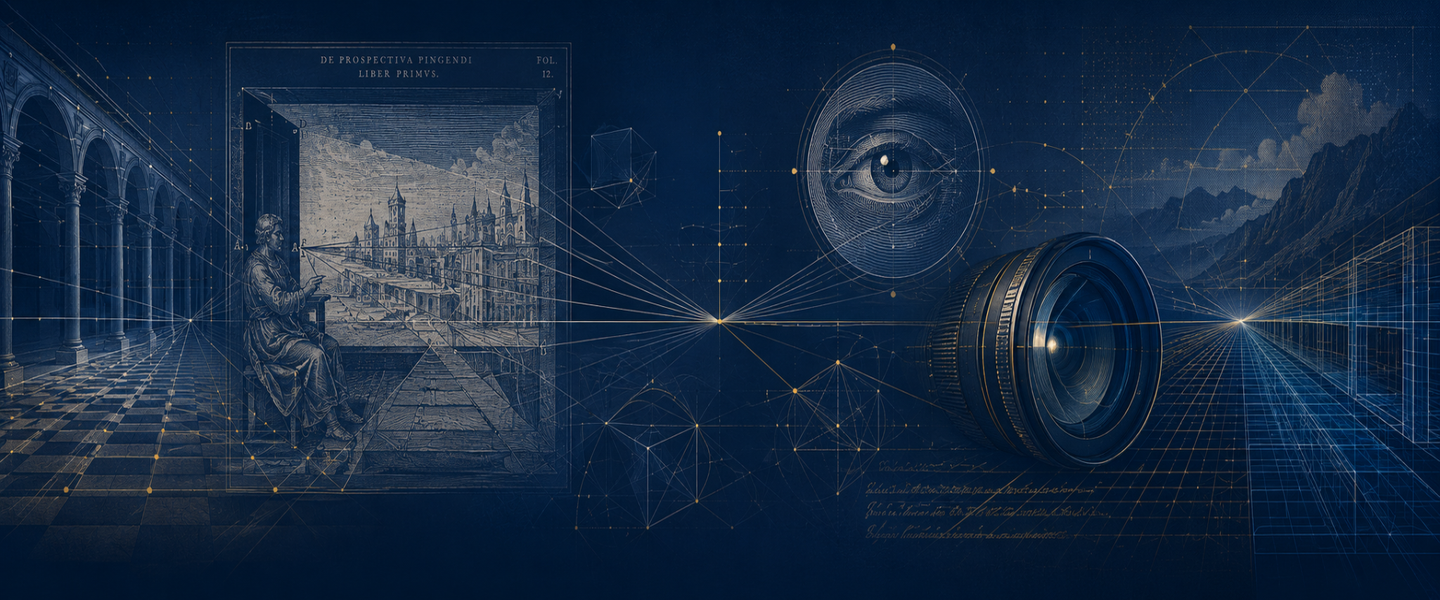

Towns, landscapes, gardens and ruins were prominent themes in early perspective books and treatises.
A Brief History of Towns, Landscapes, Gardens and Ruins
Fifteenth-century paintings featured towns in the background, while by the sixteenth century, such views became prominent, as seen in Dürer’s Innsbruck. Military and documentary needs influenced this trend, with artists sketching towns and battles, much as reporters’ cameras did. However, outside Rome, Italy showed minimal interest in town views, while France’s Pérelle (1666-) published collections of Paris, French chateaux, and Rome.
In the eighteenth century, town views became increasingly important in Britain. Buck (1736) proposed six perspective views of Canterbury, Rochester, and Chichester, followed by York and Leeds in the next decade. Smith (1750) published views of County Cork’s towns, while anonymous works on Oxford (1753) and Shrewsbury (1756) emerged.
By the nineteenth century, town views became common in perspective treatises, with Edwards (1805) showing multiple views of cities, and Wood (1809) depicting fashionable London scenes.
Landcapes
Many treatises blurred the line between townscapes and landscapes, as shown in Edwards’s 1805 engraving of houses on a hill, which presents a townscape on one side and a landscape on the other. Edwards’s illustrations often featured architectural elements within landscapes, erasing clear distinctions. This ambiguity dates back to the sixteenth century, when authors like Du Cerceau contextualised buildings, and is seen in the works of Dubreuil and Robert, where town and country frequently coexist.
In the late eighteenth century, landscape became an independent theme, notably through Werner’s use of perspective in flowers, animals, humans, and landscapes.
In the nineteenth century, Basoli created landscape views, while English treatises like Orme’s (1801) and Noble’s (1805) addressed landscape drawing. Later works also emerged from Wood, Varley, Nicholson, Fielding, Robert, and Vanderveken.
Gardens
The theme of gardens in the sixteenth century was intertwined with landscapes, ruins, and idealised buildings. Androuet Du Cerceau depicted ancient gardens alongside Roman ruins and contemporary gardens with châteaux. Vredeman de Vries published the first collections of perspectival garden views, adapting classical column orders. This established an approach to nature as artifice, further developed by authors like Salomon de Caus, who used automata. Subsequent gardening books included brief instructions on the effects of perspective.
The eighteenth century saw the emergence of books on garden perspectives in England, such as Serle’s (1745) Plan of Mr Pope’s garden and Chatelain’s (1753) views of Stowe.
The nineteenth century introduced works focused on the design of perspectival gardens, such as Vergnaud (1835) and Glindemann (1900).
Ruins
Key figures in early architecture include Brunelleschi, Alberti, Filarete, da Vinci, Bramante, and Palladio, who shaped both practice and theory. Brunelleschi studied Roman ruins and developed new recording methods, exemplifying the humanist blend of modern and ancient architecture. Alberti, author of works on painting and architecture, and Francesco di Giorgio Martini, who wrote on perspective and the measurement of buildings, shared this dual focus.
Rome became a hub of architectural activity due to papal patronage from Alexander VI and Leo X. In the early 16th century, Raphael’s letter to Pope Leo X discussed ground plans and ruins, alongside his commentary on Vitruvius. Palladio refined the use of perspective in design, while Androuet du Cerceau specialised in three types of books covering perspective, ancient ruins, and contemporary architecture.
Androuet’s work influenced later books, such as Pérelle and Decker, that presented contemporary buildings in context. Modern artists began adding context to previously isolated architectural studies. Heemskerck and Francisco de Hollanda created vedute of Roman ruins, while Hieronymous Cock published one of the first collections of views in 1550. In 1575, Etienne Du Pérac published a work connecting these views to perspective, later introducing perspectival gardens to France, influencing Le Nôtre at Versailles.
In Italy, the tradition of perspective led to Piranesi’s stunning depictions of dungeons and cityscapes, as well as his engravings in Architectura et Perspectiva (1743), which resemble modern photographs. By the eighteenth century, strong links existed between perspective and photographic realism. The fascination with ancient monuments and the practice of surveying them contributed greatly to this development. Rome was central to the evolution of classicism in architecture and perspectival views, reflecting a broader trend across Europe.
Making drawings of Roman ruins using linear perspective became popular among artists during the 18th-19th centuries.
Capriccios
In painting, a capriccio is an architectural fantasy that combines buildings, archaeological ruins, and other architectural elements in fictional, often fantastical ways. These paintings may also include staffage (human and animal figures, etc). Falls under the more general term of landscape painting. This painting style was introduced in the Renaissance and continued into the Baroque.
-- < ACKNOWLEDGMENTS > --

AUTHORS (PAGE / SECTION)

Kim Henry Veltman (1980 - 2017) - author of main body of text on this page.
---

BIBLIOGRAPHY

Veltman, K.H. (1980) 'Ptolemy and the Origins of Linear Perspective' - Atti del convegno internazionale di studi: la prospettiva rinascimentale, Milan 1977, ed.
Marisa Dalai-Emiliani (Florence: Centro Di, 1980), pp. 403-407.

Veltman, K.H. (1992) 'Perspective and the Scope of Optics' - unpublished.

Veltman, K.H. (2017) 'Perspective from Antiquity to the Present' - unpublished.

Veltman, K.H. (1994) 'The Sources of Perspective' - published as an online book (no images). Later published with images as 'The Encyclopaedia of Perspective' - Volumes 1, 2 - (2020) by Alan Stuart Radley at the Perspective Research Centre.

Veltman, K.H. (1994) 'The Literature of Perspective' - published as an online book (no images). Later published with images as 'The Encyclopaedia of Perspective' - Volumes 3, 4 - (2020) by Alan Stuart Radley at the Perspective Research Centre.

Veltman, K.H. (1980s-2020) 'The Bibliography of Perspective' - began as a card index system in the 1980s; before being transferred to a dBASE-3 database system on an IBM PC (1990s). Later the bibliography was made available on the web on the SUMS system (2002-2020). In 2020 the Bibliography of Perspective was published as part of'The Encyclopaedia of Perspective' - Volumes 6, 7, 8 - by Alan Stuart Radley at the Perspective Research Centre.
---

Copyright © 2020-26 Alan Stuart Radley.
All rights are reserved.