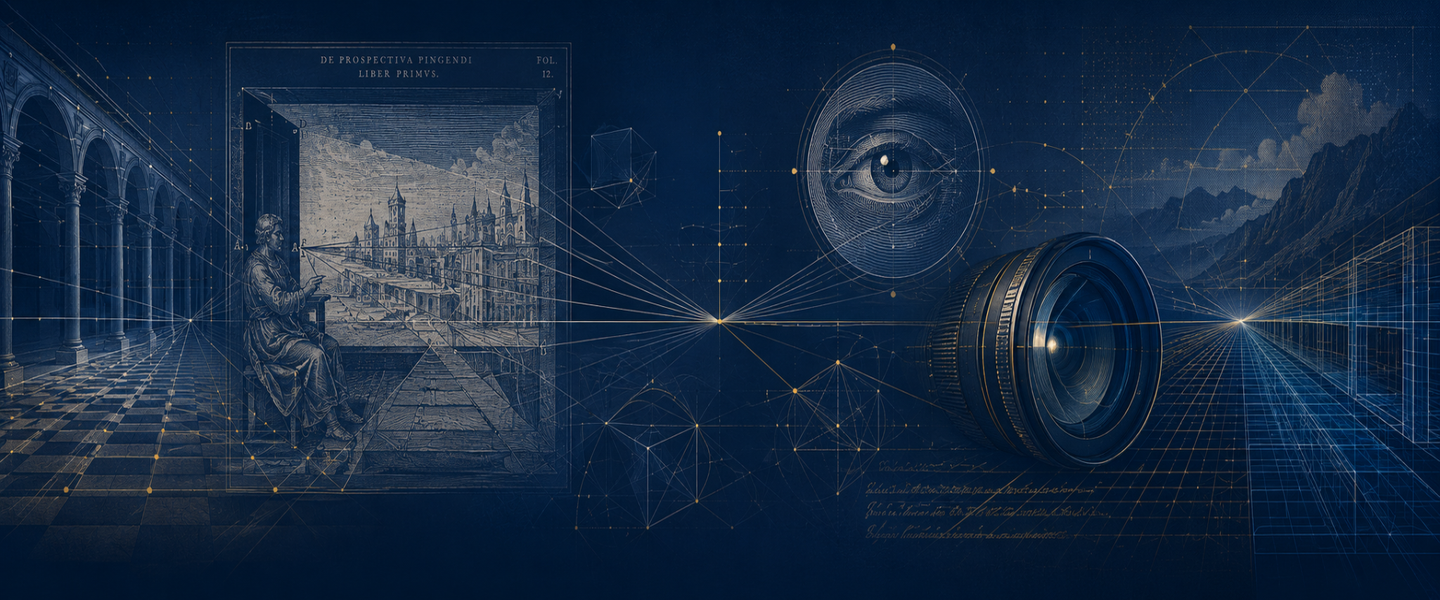

Space is a three-dimensional continuum defining positions and directions.
In classical physics, it is viewed as three-dimensional, while modern physics combines it with time into a four-dimensional spacetime. This concept is crucial for understanding the universe, though debates persist about its nature—whether it’s an entity, a relationship, or a conceptual framework.
In geometry, three-dimensional space, typically Euclidean, requires three coordinates for positioning, often referring to a 3-D region or solid figure. Ultimately, 3-D space represents the mathematical and physical model of our world, described by length, width, and height.
Space and Perspective
To begin, we identify some core concepts:
- Coordinate Systems: In mathematics, the most common way to map 3-D space is the Cartesian coordinate system, using three axes (x, y, and z) that meet at a central point called the origin.
- Physical Reality: Everything we touch and move exists in 3-D. While a flat drawing has only length and width (2-D), a physical object like a cube or a ball adds the third dimension of depth.
- The Fourth Dimension: In physics, especially under Einstein’s Theory of Relativity, time is often treated as a fourth dimension (t), merging with space to form a 4-D “spacetime continuum”.
These ideas relate to how the concept of space is used in the field of perspective; but in some cases perspective treats space in novel and unfamiliar ways.
Perspective encompasses natural perspective—how we see things, and artificial perspective— how we represent this in various media. Perspective principles and methods are essential for understanding space, particularly the third dimension.
Accordingly, we have three kinds of space (Image space = perspective space):
- Physical 3-D space (object space);
- Natural optical space [2-D/3-D image space] or natural visual image space (2nd type) [monocular/binocular], and
- Artificial/instrument image space [2-D/3-D] or graphical/represented image space [2-D/3-D].
Geometry of 3-D Space
Geometry studies properties of space, including distance, shape, size, and figure positioning.
Basic kinds of coordinate space geometry (sample types only)
- Body-Coordinate System Space [3-D]: object and/or image space.
- Cartesian Space (Cartesian coordinates) [3-D]: object and/or image space.
- Flat Space [2-D], Curved Space [2-D/3-D], Riemannian Space [3-D]: object or image space.
- Flat Spherical Space [2-D], Spherical Space [2-D/3-D] (polar): object or image space.
- Euclidean Space [2-D/3-D], Non-Euclidean Space [2-D/3-D]: object and/or image space.
Kinds of perspective space <IMAGING CLASS> (abbreviated list)
- Linear Perspective space [2-D]. Physical or scene-based Linear Perspective space [3-D].
- Curvilinear space [2-D/3-D], Cylindrical space [2-D/3-D], and Spherical space [2-D/3-D].
- Visual space (2nd type or retinal): monocular/binocular – 2-D/3-D.
- Represented or graphical space: 1-D Space, 2-D Space, 2.5-D Space, 3-D Space.
- New Media / Virtual Reality / CGI Space: interactive 3-D model or 3-D optical model of spatial reality.
- Sphere / Circle / Cylinder of Vision Perspective [2-D/3-D]: spherical/circular space, with eye as origin.
- Sphere / Circle / Cylinder of Revolution Perspective [2-D/3-D]: spherical/circular space, with object as origin.
Categories of Space
In terms of Perspective Category Theory, category refers to the components of a perspective system <IMAGING CLASS>, or a conjoined set of Optical/Mathematical/Graphical/Instrument/Simulated/New Media processes involved in producing a perspective image/view.
Each perspective system category deals with a specific kind of 2-D/3-D image space, or with transforming an object/target space into a perspective space. Sometimes the same perspective subclass appears under multiple top-level categories; this is called category overloading, and it involves multiple kinds of perspective space. Also, when more than one category is involved in producing a perspective view/image, as in category chaining or composite perspective (1), multiple kinds of perspective space are involved.
Kinds of perspective space (natural and artificial classes) – [all may be 2-D/3-D (apart visual)]
- Physical Space —————————- Natural Perspective
- Optical Space —————————— Optical Perspective
- Visual Space ——————————— Visual Perspective (2nd type) – [monocular/binocular]
- Mathematical Space ——————— Mathematical Perspective
- Graphical Space ————————— Graphical Perspective
- Instrument Space ————————- Instrument Perspective
- Simulated / Illusive Space ————- Simulated Perspective
- Digital / New Media Space ———— New Media Perspective
3-D Space – Invisibility of
It is interesting to consider how perspective is linked to the concept of invisibility.
- Space is Invisible (intrinsic property of space): Space is invisible, and we humans rely on recognising standard shapes within spatial views/images and on orienting ourselves in relation to, and mapping/understanding, dimensional scenes/objects.
- An “Invisible” region of Space (objects present but illusion of emptiness): Invisible Perspective. Perspective methods/systems can produce an apparent region of physical space that is invisible, or that can contain objects hidden from the viewer of a spatial scene. Note that the space is not blocked in any detectable sense, but rather the view appears open, empty, and unobscured.
3-D Space – Invisibility Methods
Perspective methods can create an apparently invisible region of space containing hidden objects, presenting an unobstructed view.
There are many invisibility techniques, but the basic classes are:
- Optically produced invisibility (live image viewing); and
- Filmic or digital / New-Media produced invisibly (live or recorded image viewing); and
- Combined optical and digital/New Media produced invisibility (live or recorded image viewing).
We can list some optically produced invisibility methods:
- Angled mirrors can make objects appear ‘invisible’ by diverting light rays and creating a (secretly) split, fragmented or diverted view.
- Specially arranged mirrors/prisms can make objects appear ‘invisible’ by diverting light rays and creating a (secretly) split, fragmented or diverted view.
- Lenticular ‘invisibility cloaks’, can make objects appear ‘invisible’ by diverting light rays and creating a (secretly) split, fragmented or diverted view.
- Double/blended space illusion (physically adjusted environment): manipulation of false ’vanishing points can result in a multi-scale space in which objects can potentially be hidden.
- Rotated/diverted view Illusion: in 1983, magician David Copperfield famously made the Statue of Liberty disappear in a massive televised illusion using a rotating platform to shift the audience’s view while obscured by a curtain. Here we have different apparent and true viewing directions.
3-D Space – Transformed Perspective Spaces
Several kinds of systematically transformed perspective spaces are identified to achieve perspective viewing, matching, and representation goals, as well as illusory, immersive, and optical/visual special effects; some of the more unusual ones are detailed below. Note that this is only a sample list, and that combination(s) of these and other kinds of space can be employed to produce a large number and wide variety of transformed perspective spaces. Sometimes, different names refer to the same type of optical/visual effect, due to the varied history of perspective terminology.
Transformed perspective space(s) (natural / artificial) – [all may be 2-D/3-D (apart visual)]
- Accelerated / Forced Space – type of simulated and (possibly) synthetic perspective (apparent spatial structure) that (for example) employs forced perspective to increase the perspective recession.
- Anamorphic Space – view/image with global geometry distortion.
- Blended Scene Space – comprises two or more separate spatial geometries (indistinct).
- Blended Image Space – multi-view image containing separate images/view (distinct/indistinct).
- Category Chained Space – singlecategory image involves multiple categories and spaces (normal case).
- Category Overloaded Space – multiplecategories produce multiple or blended kinds of space.
- Cleft Space – split or fragmented space at two different distances or planes from the eye/camera.
- Combined Space (multi-view) – image contains both real and represented views (distinct).
- Combined Space (multi-scene) – synthetically unified scene – single scale-space (distinct/indistinct).
- Combined Space (universal + particular) – universal scene and particular views.
- Complex Space (A) – interaction of artificial and natural perspective(s).
- Complex Space (B) – central rays falling between all object/image point(s) are not symmetrical.
- Composite Space – more than one category is involved to produce a perspective view/image.
- Compositional Space (A) – derived partly from art (graphics) and partly from nature (vision/ optics).
- Compositional Space (B) – universal scene and particular views.
- Convergent Space – diminution of size perspective (ref. linear perspective).
- Divergent Space – Graphical space in which objects increase in apparent size at increasing distance.
- Double Space – two separate perspective spaces are combined into an apparent direct or simulated real-space view that exhibits illusive properties (indistinct).
- Fragmented / Split Space – Use of layered or multi-view approaches, for example, a cleft space for spatial manipulation, with actors at two different distances from the camera.
- Invisible Space or Invisible Perspective: a visually hidden region of a spatial scene.
- Manifold Space – A combined image consisting of both a reflection and a transmission. Such as when you see your own reflection in a shop window while simultaneously seeing the shop’s interior.
- Mirror Space (ordinary reflection) – a plane mirror. See: “virtual space” entry below.
- Mirror Space (types): convex/concave mirror, hologram mirror, faux space mirror illusions (many types).
- Multi-Plane Space – Any perspective method that enables in-focus imaging of transparent or semi- transparent planes of space to be captured in one or more images, or else represented.
- Multi-Scene Space (A) – synthetically unified scene – single scale-space (indistinct).
- Multi-Scene Space (B) – unified scene by image blending/combination, image overlay/substitution, or another method – single or multiple scale-space (district or indistinct).
- Multi-View Space (Single Scene) – changing viewpoint in real time (CAD/ digital games).
- Multi-View Space (Multiple Objects) – when a single image contains multiple objects (multiple aspects).
- Multi-View Space (Orthographic) – first or third-angle projection.
- Multi-View Space (New Media) – linkage and interactive exploration of a 3-D digital model/world.
- Non-Unified Space – non-unified (central) vanishing point gives a non-scientific space.
- Parallel / Paraline Space – the graphical space of parallel projection or primary views (1st/3rd angle).
- Simulated Space – designed illusive/immersive images/views of a spatial reality, by visual illusion or optical adjustment of physical reality.
- Sphere of revolution / sphere of vision space. Possible mixing of, see: spherical view (1,2,3)
- Synthetic Space – any (systematic) or accidental combination of natural and artificial perspective.
- Unified Space – unified (central) vanishing point gives a scientific space.
- Virtual Mirror Space – AR-enabled screens with cameras that reflect users in real-time for virtual clothing try-ons and immersive experiences.
- Virtual Reality Space: virtual or augmented reality space that is stereoscopic in form.
- Virtual Space – Space behind a mirror is the perceived location of reflected images, a 3-D illusion created by the brain interpreting reflected light as originating from behind the mirror.
- Volume Display Space (convex screen) – static or camera-relative generated background views.
- Volume Display Space (concave screen) – static or camera-relative generated background views.