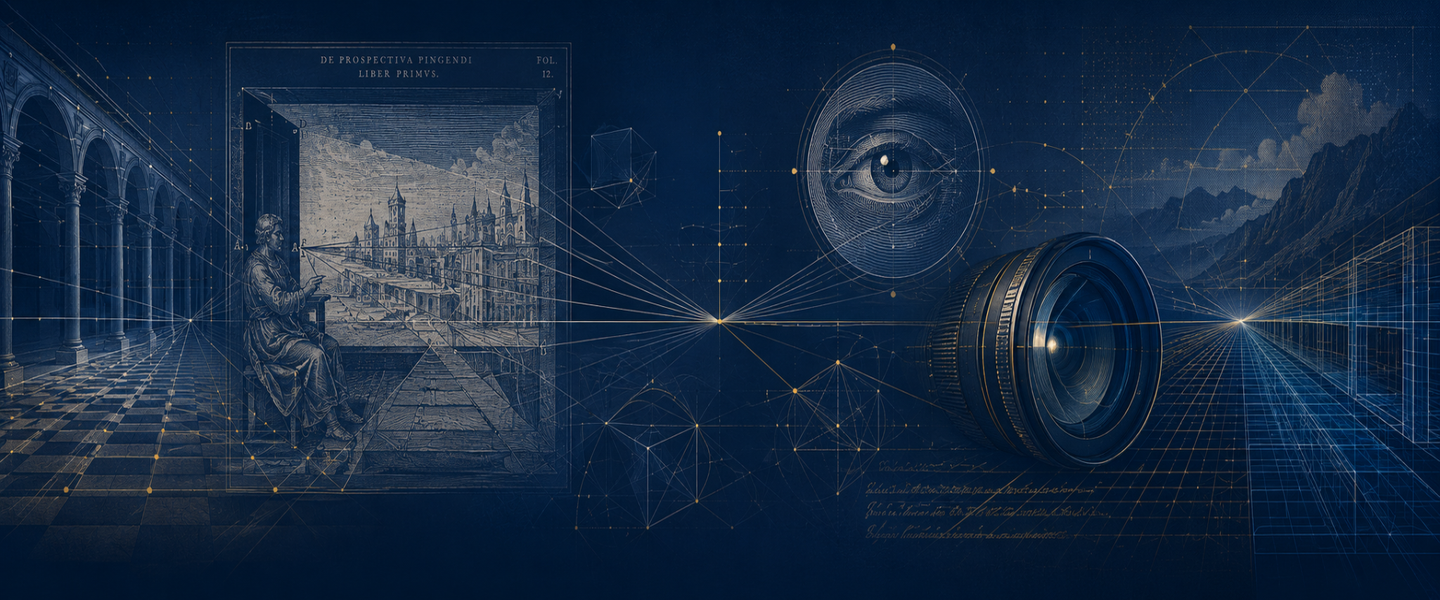

Patently art, and all kinds of visual/optical/technical perspective are intimately involved or intertwined with light, which renders attendant views/images visible. However, some artists have placed greater emphasis not on images but on the nature and effects of light itself.
Light Art
Light art is a visual medium in which light—whether natural, electric, neon, or LED—serves as the primary artistic element rather than merely illuminating a piece. It encompasses immersive spatial installations, illuminated sculptures, and photographic light-painting techniques.
Pioneered in the early 20th century by artists like László Moholy-Nagy and later popularised by the 1960s Light and Space movement, the genre treats photons and illumination as sculptural materials.
Op Art
Op art was a major development in painting in the 1960s that used geometric forms to create optical and illusory effects, often creating the illusion of a 3-D space on a 2-D picture plane, either through combinations of linear perspective, false perspective, accelerated perspective, and/or other monocular depth cues. Victor Vasarely (1906 – 1997) was a Hungarian-French artist, who was a leader of the Op art movement.

KEZDI-DOMB, 1968 – 1975
Pointillism
Pointillism is a painting technique that uses small dots of colour to create an image. The technique was developed by French artists Georges Seurat and Paul Signac.
How it works
- Artists apply tiny dots of pure colour in close proximity
- When viewed from a distance, the eye mixes the dots together to create solid areas of colour
- Pointillist painters often use complementary colours, such as red and green, or blue and orange, to make their subjects more vibrant
History
- Pointillism originated from Impressionism
- The technique is based on colour separation theories
- French chemist Michel Eugene Chevreul’s discoveries influenced Seurat

Lumia
Lumia is a form of kinetic art that uses light. The term was coined by a twentieth-century artist, Thomas Wilfred, who built elaborate optical machines to display lumia on large screens. The three main elements are form, colour, and motion in a dark space. Wilfred’s original contribution to lumia was the introduction of a fourth dimension – time – or variable rates and forms of colour/motion.

You must be logged in to post a comment.