
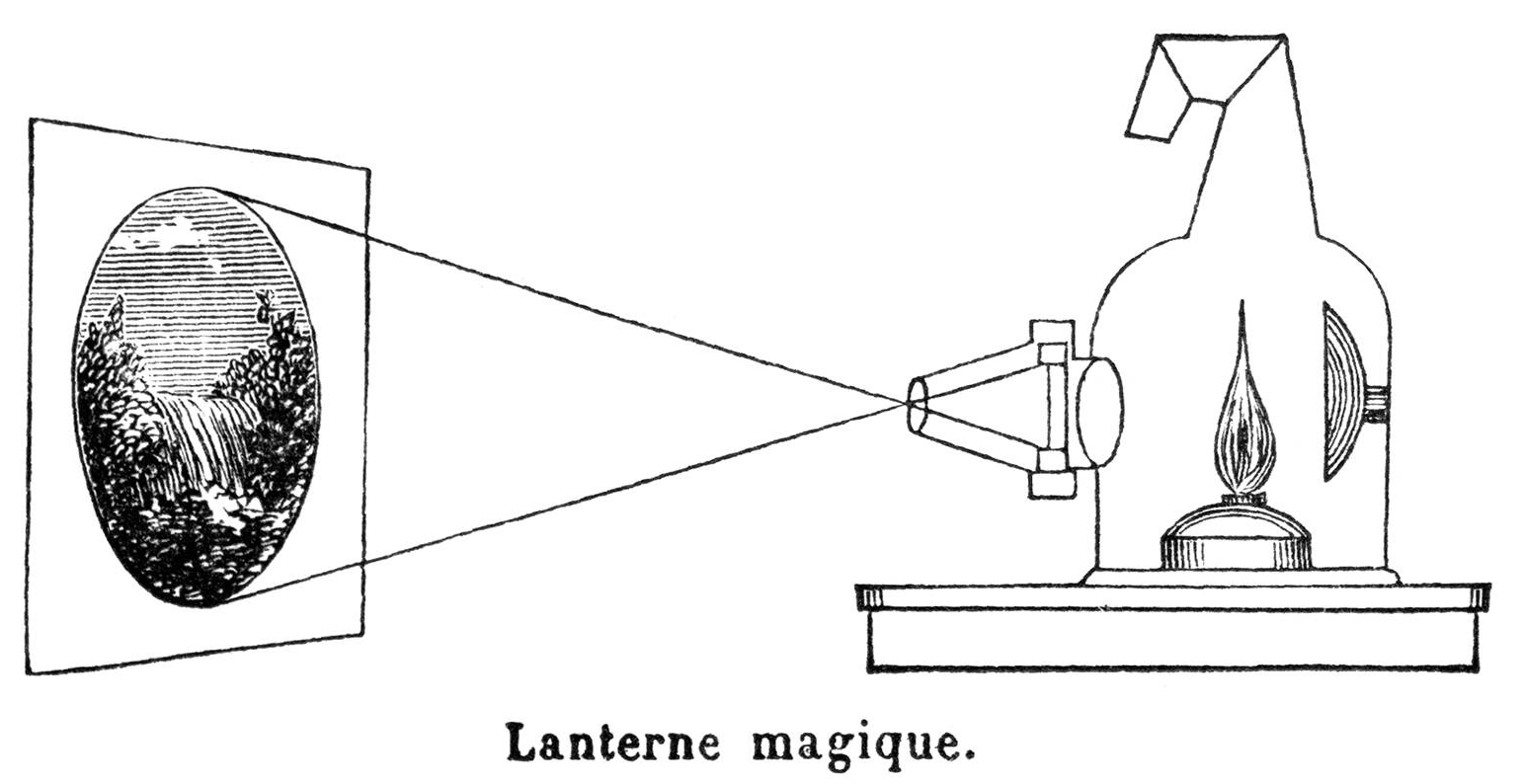
The magic lantern, in Latin lanterna magica, was an early type of image projector that employed paintings or photographs—prescribed on transparent plates (usually glass plates), one or more lenses, plus a light source. Because a lens inverts an image projected through it, slides are inserted upside down in the magic lantern, allowing the projected image to be correctly oriented.
The magic lantern was developed in the 17th century and commonly used for entertainment purposes; and different versions (mainly for displaying non-moving images) were in widespread use from the 18th century until the mid-20th century (including the overhead and 35 mm photographic slide projector(s)), which where later superseded by digital projectors. Interestingly, magic lanterns can be considered the direct a forerunner of photographic and digital cinema projectors.


 Perspective Research Centre
You must be logged in to post a comment.