
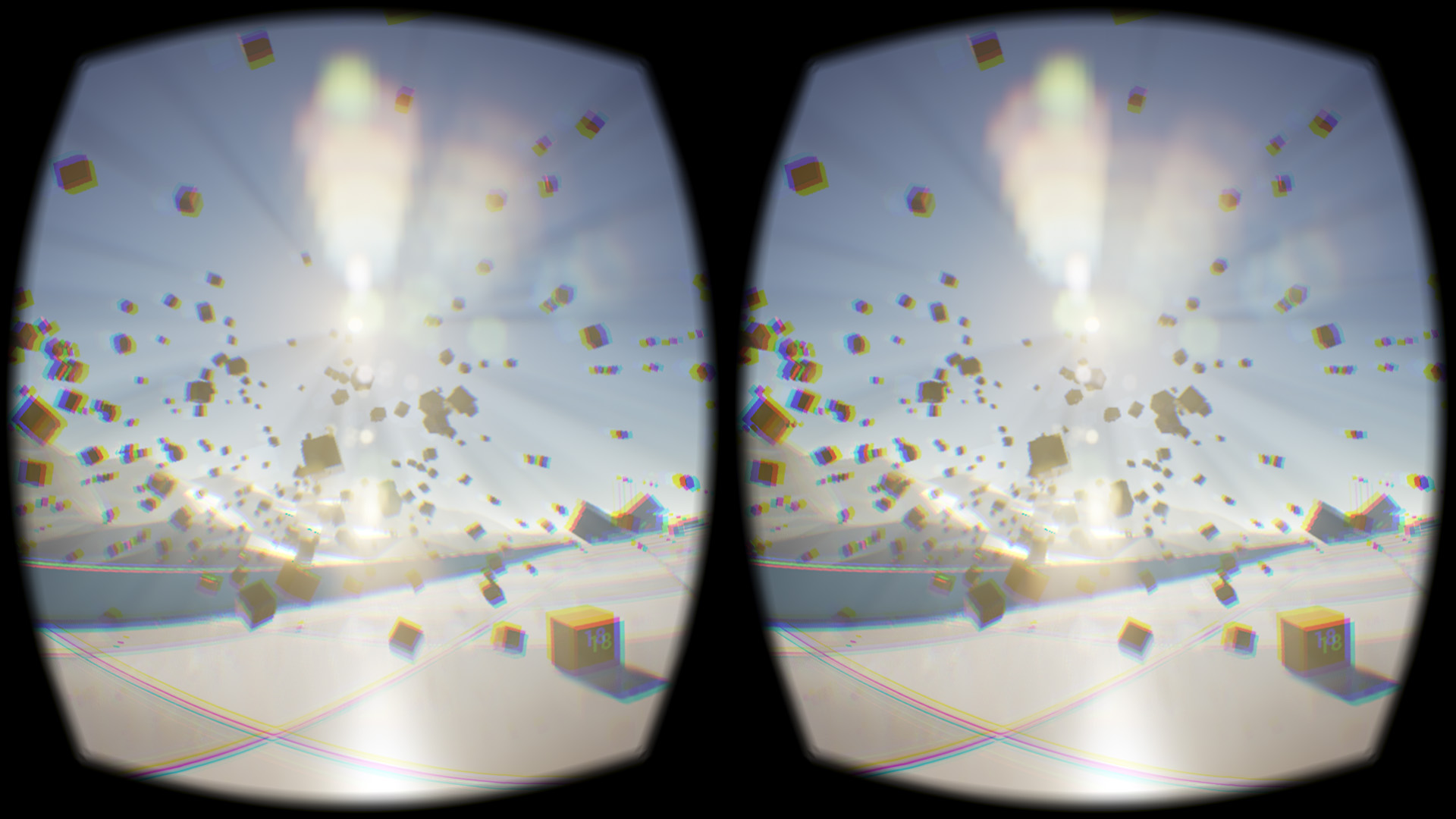
A virtual reality headset (or VR headset) is a head-mounted device that uses 3-D near-eye displays and positional tracking to provide a virtual reality environment for the user. VR headsets are typically used with Virtual Reality video games, but they are also used in other applications, including simulators and pilot trainers.
VR headsets often include a stereoscopic display, stereo sound, and sensors like accelerometers and gyroscopes for tracking the pose of the user’s head to match the virtual camera’s orientation with the user’s eye positions in the real world.

Augmented reality (AR) headsets are VR headsets that enable the user to see and interact with the outside world. Examples of AR headsets include the Apple Vision Pro and Meta Quest 3. AR headsets are set to rise in popularity or widespread adoption as new related inventions and AR headset models come online. In the future, such systems may be built into eyeglasses/spectacles, contact lenses, etc.
Most headsets are reliant on a personal computer, but some use a smartphone, tablet or employ headset/spectacle computer hardware to operate. Some “standalone” headsets are based on a mobile operating system and smartphone-like hardware, allowing VR apps to run directly on the device, while allowing VR applications to be streamed from a PC over a USB or Wi-Fi connection.
 Perspective Research Centre
You must be logged in to post a comment.